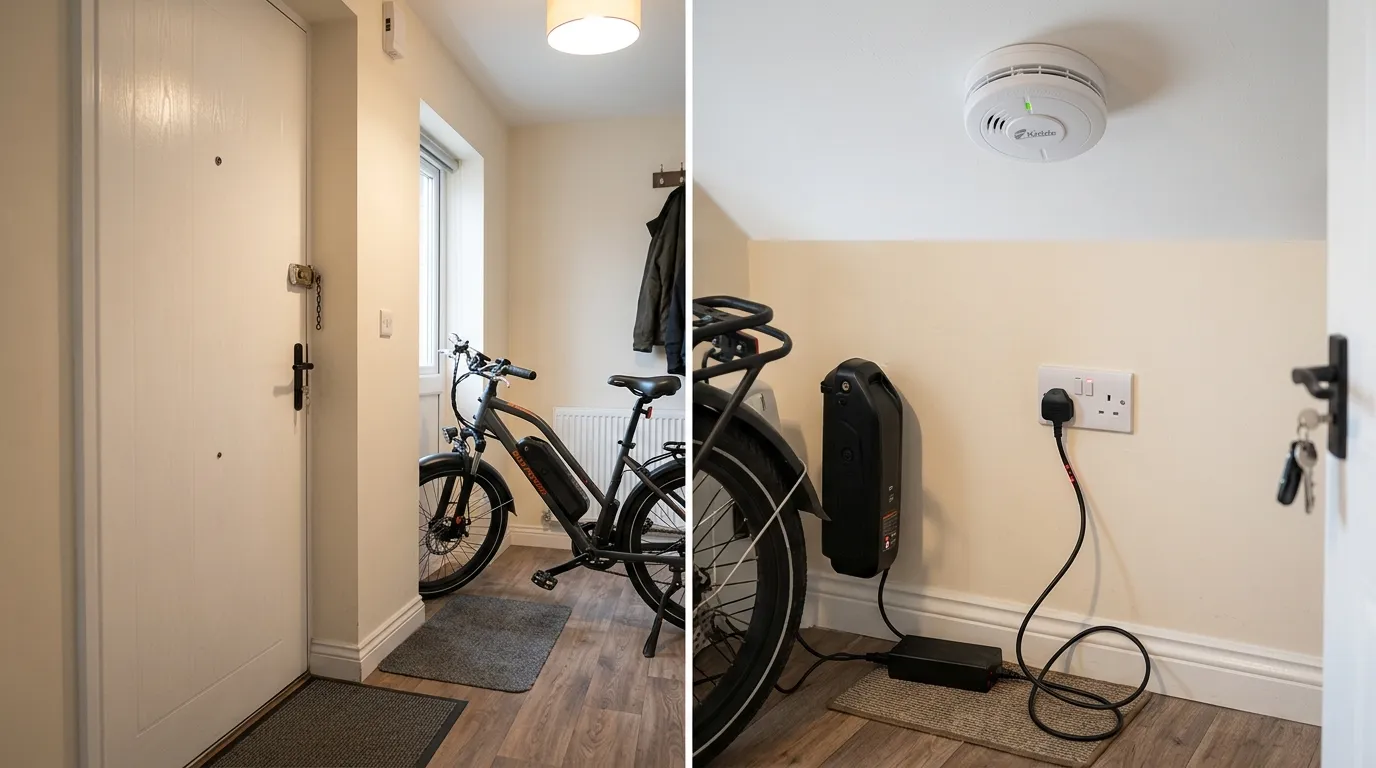
E-bikes and e-scooters are everywhere. Commuters, delivery riders, and residents across London and the UK are using them daily — and charging them at home, often in hallways, kitchens, and communal areas.
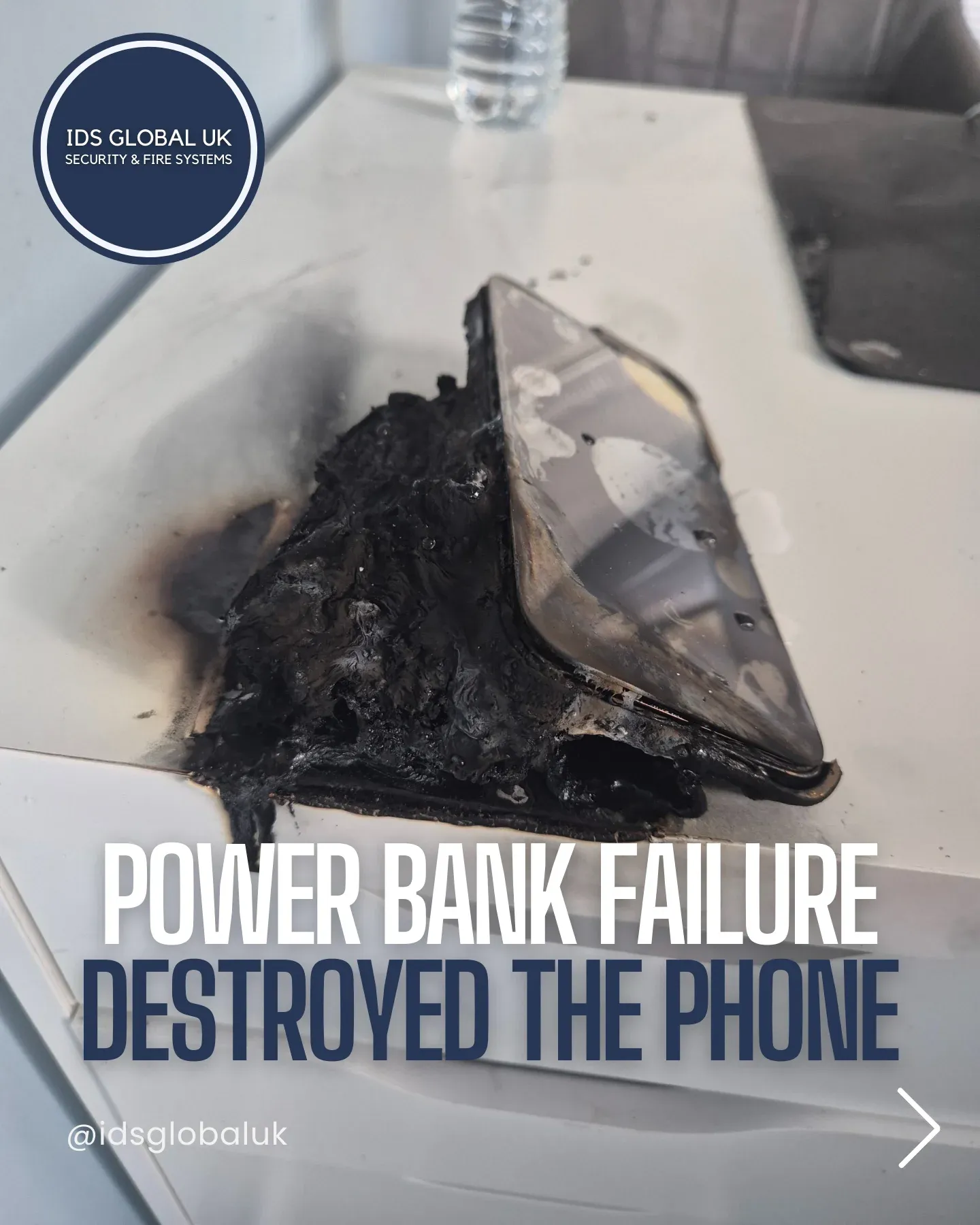
The problem is that lithium-ion batteries, when they fail, fail violently. And the number of fires is climbing year on year.
If you manage residential property — whether as a landlord, housing association, or facilities manager — this is now a fire risk you are legally required to address.
The Numbers Are Rising Fast
London Fire Brigade attended 155 e-bike and e-scooter fires in 2023, up 34% from 116 the year before. By 2024, that figure exceeded 190. Since 2020, LFB alone has responded to over 500 of these fires across London, resulting in multiple fatalities and more than 130 injuries.
Nationally, UK fire services dealt with an estimated 300+ e-bike and e-scooter fires in 2023, and the National Fire Chiefs Council has identified lithium-ion battery fires in micromobility devices as a “significant and growing risk.”
These are not isolated incidents. They represent a trend that is accelerating in step with e-bike ownership, which has now surpassed one million units in the UK.
Why Lithium-Ion Battery Fires Are So Dangerous
E-bike and e-scooter battery fires behave differently to most residential fires. Understanding why matters when assessing the risk to your property and residents.
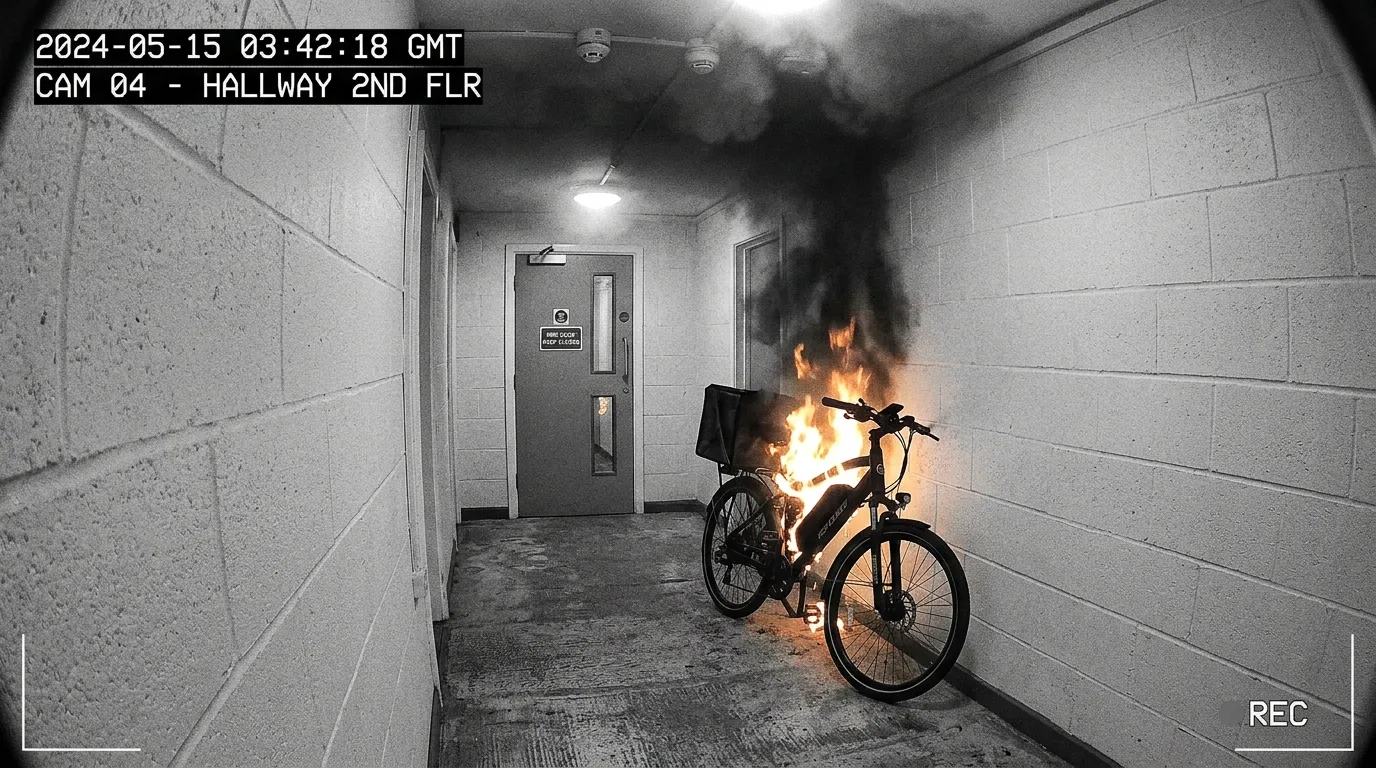
Thermal runaway is the primary failure mode. When a lithium-ion cell is damaged, overcharged, or contains an internal defect, it can enter an uncontrollable chain reaction reaching temperatures above 600°C. Once one cell ignites, adjacent cells follow — and the entire battery pack can be fully involved within seconds.
Key characteristics of these fires:
- Speed — A battery can go from first smoke to full room involvement in under 90 seconds. Residents often have almost no warning.
- Toxic gases — Burning lithium-ion cells release hydrogen fluoride and other highly toxic fumes, which are particularly dangerous in enclosed residential spaces.
- Difficult to extinguish — Standard fire extinguishers are often ineffective. The fire can reignite hours after appearing to be out.
- Explosive force — Batteries can rupture and project burning material across a room, spreading fire rapidly.
What Causes These Fires
Not every e-bike or e-scooter battery is a fire risk, but certain factors dramatically increase the likelihood of a serious incident:
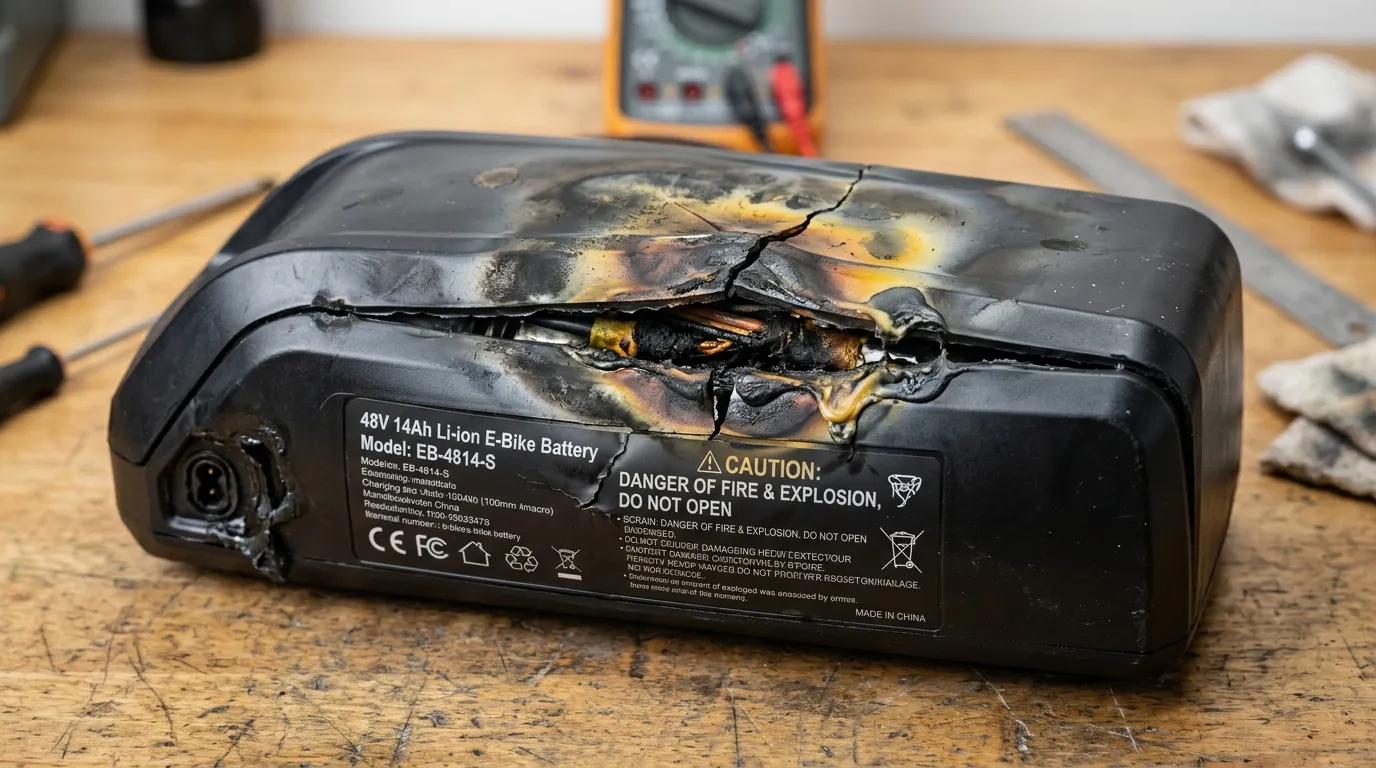
- Non-original or counterfeit batteries — This is the single biggest risk factor. Cheap replacement batteries purchased online frequently lack proper Battery Management Systems, use substandard cells, or have inadequate thermal protection. London Fire Brigade has identified this as the cause in the majority of serious incidents.
- Incorrect chargers — Using a charger with the wrong voltage or amperage can overcharge cells, triggering thermal runaway.
- Physical damage — Batteries that have been dropped, crushed, or exposed to water may have invisible internal damage that causes delayed failure during charging.
- Overnight and unattended charging — Leaving batteries on charge for extended periods without supervision increases risk, particularly with older or degraded cells.
- DIY modifications — Users upgrading batteries or modifying electrical systems without proper knowledge, bypassing built-in safety mechanisms.
Your Legal Obligations
If you are the responsible person for a residential building with communal areas, the law already requires you to act.
The Regulatory Reform (Fire Safety) Order 2005 requires fire risk assessments for communal areas of residential buildings to account for all known fire hazards. The government has confirmed that this includes the risk from e-bike and e-scooter charging. If your fire risk assessment does not address this, it is out of date.
The Fire Safety (England) Regulations 2022 require responsible persons in multi-occupied residential buildings to provide fire safety information to residents. This should now include guidance on safe e-bike and e-scooter charging practices.
The Building Safety Act 2022 imposes additional duties on Accountable Persons for higher-risk buildings (18 metres or above / 7+ storeys), including the requirement to assess and manage fire risks from lithium-ion battery charging in communal and residential areas.
The Housing Health and Safety Rating System (HHSRS) allows local authorities to take enforcement action where fire hazards, including those from e-bike and e-scooter charging, are identified in rented properties.
The legal position is clear: if you are aware that residents are charging e-bikes or e-scooters in your building and you have not taken reasonable steps to manage the risk, you have potential exposure — both civil and criminal.
What You Should Do Now
Managing this risk does not require banning e-bikes outright, but it does require a structured approach. Here is a practical checklist:
Update Your Fire Risk Assessment
Your fire risk assessment must reflect current hazards. If it was last reviewed before e-bike and e-scooter charging became widespread in your building, it needs updating. The assessment should specifically consider where residents are charging, what detection is in place, and whether escape routes are compromised.
Implement a Clear Charging Policy
Include e-bike and e-scooter charging provisions in tenancy agreements and display clear signage in communal areas. At minimum, your policy should prohibit:
- Charging in communal hallways, stairwells, and escape routes
- Charging unattended overnight in any indoor location
- Use of non-original batteries or chargers
- Storage of spare batteries in communal areas
Ensure Adequate Fire Detection
Smoke and heat alarms must be present and working in all areas where charging may occur. In blocks of flats, consider linked or networked alarm systems that alert the entire building — not just the individual flat — in the event of a fire. Given how fast these fires develop, early detection is critical.
Consider Dedicated Charging Infrastructure
Where feasible, purpose-built external charging stations or fire-rated charging lockers offer a significantly safer alternative to indoor charging. Several forward-thinking housing associations are already investing in this infrastructure. It removes the risk from residential areas entirely.
Communicate With Residents
Regular communication is essential. Residents need to understand:
- The genuine risks of lithium-ion battery fires
- Why cheap replacement batteries and chargers are dangerous
- How to spot a damaged or swollen battery
- What to do if a battery starts smoking or catches fire (get out, close the door, call 999)
Monitor and Enforce
Regular inspections of communal areas for unauthorised charging, supported by CCTV where appropriate, help ensure compliance. Enforcement is not about penalising residents — it is about keeping everyone in the building safe.
Insurance Implications
This is an area many landlords and property managers have not yet considered, but insurers are paying close attention.
- Disclosure — If you are aware that tenants are charging e-bikes or e-scooters on your premises, you should inform your insurer. Failure to disclose a known fire risk could be grounds for declining a claim.
- Policy conditions — Some insurers are now adding specific conditions or exclusions relating to lithium-ion battery charging. Check your policy wording.
- Premium impact — The National Housing Federation has reported that some housing associations are seeing 10–15% premium increases partly attributed to this emerging risk.
- Liability — If a fire occurs and you have not updated your fire risk assessment or implemented reasonable precautions, you face potential civil liability claims from affected residents, as well as criminal prosecution under the Fire Safety Order.
The Situation Is Not Going Away
E-bike and e-scooter ownership is growing. Delivery services, commuter use, and rental schemes are putting more lithium-ion batteries into more residential buildings every month. The regulatory landscape is tightening, with the government under sustained pressure from London Fire Brigade and the NFCC to introduce mandatory safety standards for batteries and chargers sold in the UK.
Waiting for legislation to force your hand is not a strategy. The legal obligations already exist under the Fire Safety Order, and the consequences of inaction — for residents, for your liability, and for your insurance position — are serious.
How IDS Global Can Help
At IDS Global, we carry out fire risk assessments for landlords, housing associations, and property managers across London and the surrounding areas. We can help you assess the specific risks in your building, recommend appropriate fire detection and alarm systems, and ensure your property meets its legal obligations.
If your fire risk assessment has not been reviewed recently, or if you need guidance on managing e-bike and e-scooter charging risks in your building, get in touch for a free consultation. We will survey your property, identify the gaps, and provide clear, practical recommendations.
Call us on 0203 761 1716 or request a callback today.