As temperatures drop during the winter months, businesses can experience unexpected fire alarm activations, sometimes in buildings that have been completely unoccupied for several days.
While many people associate unwanted fire alarm activations with faulty detectors, electrical problems or dust contamination, there is another factor that is often overlooked: the internal temperature and environmental conditions of the building.
At IDS Global, we recently attended an emergency fire alarm call-out at a large manufacturing company operating a factory in London, where high-quality baths are manufactured for high-end clients.
The premises include industrial working areas, including a sanding room, where airborne dust is part of the manufacturing environment.
During a particularly cold morning, the fire alarm activated despite there being no fire and nobody in the premises.
The incident highlighted an issue that many commercial property owners and facilities managers may not immediately consider: the relationship between building insulation, internal temperatures and the performance of optical smoke detectors.
1. What Happened? A Real-Life Fire Alarm Incident
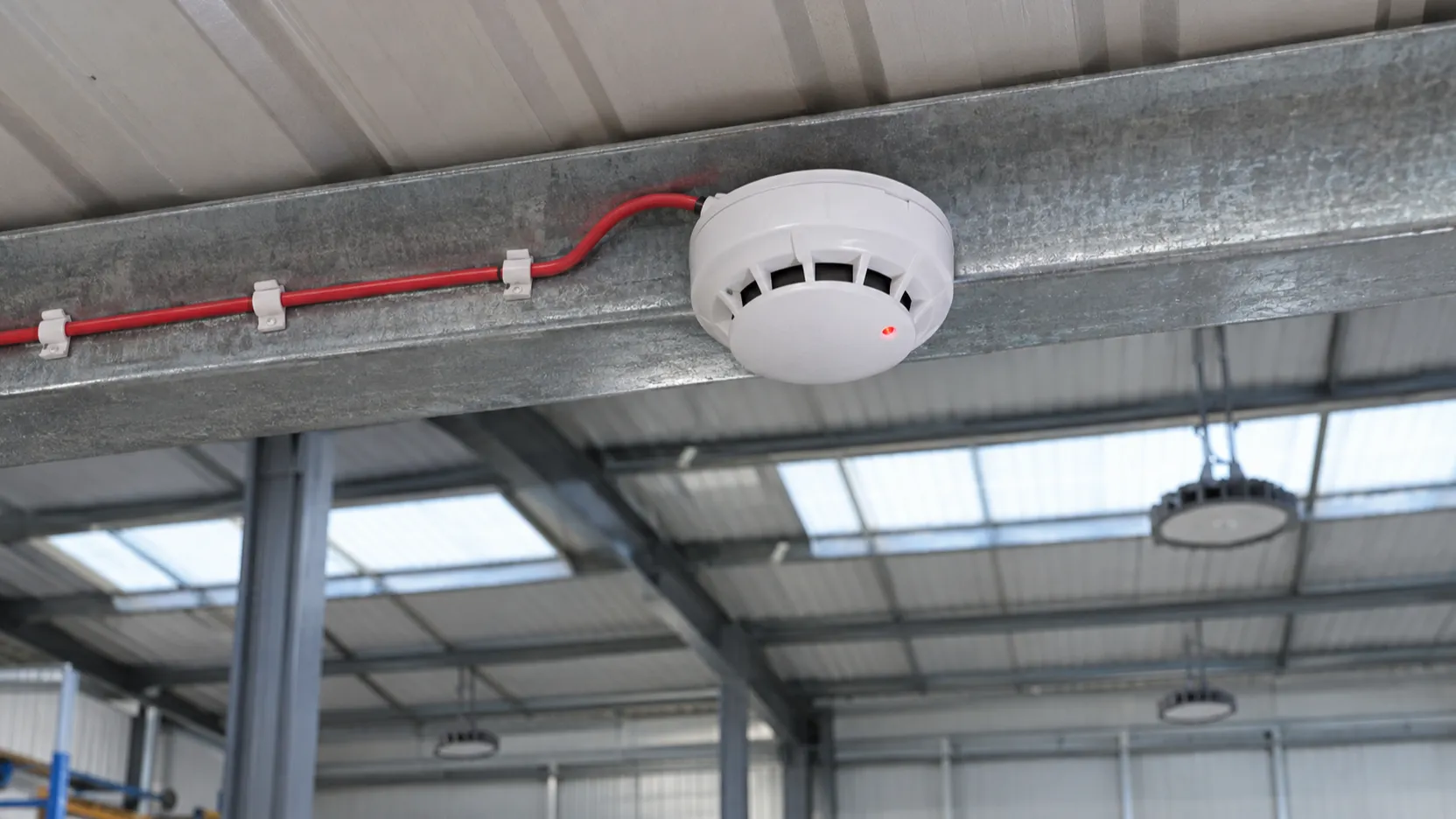
The fire alarm was activated by an optical smoke detector located near the sanding room.
There was no fire, and the customer was able to check the internal CCTV system and confirm that the premises were safe.
However, this was not the first time the building had experienced a similar problem.
On a previous occasion, just before Christmas, the premises had been closed for two days with the heating switched off.
As the internal temperature dropped significantly, frost was suspected to have formed inside one of the optical smoke detectors. This may have interfered with the detector’s optical sensing mechanism, resulting in an unwanted fire alarm activation.
The latest incident appears to have followed a similar pattern, highlighting the importance of maintaining suitable environmental conditions inside commercial buildings, particularly during extended closures and freezing weather.

2. How Does an Optical Smoke Detector Work?
To understand why this happens, it is important to understand how optical smoke detectors operate.
Optical smoke detectors use a light source and a light-sensitive receiver inside a sensing chamber.
Under normal conditions, the light does not reach the receiver directly.
When smoke enters the chamber, particles scatter the light towards the receiver. Once the detector identifies sufficient scattered light, it triggers the fire alarm.
However, smoke is not the only thing that can interfere with this process. Other environmental factors can potentially interfere with the detector’s operation and contribute to unwanted activations, including:
- Dust and airborne particles.
- Condensation and moisture.
- Insects entering the sensing chamber.
- Contamination accumulating inside the detector.
In particularly cold environments, condensation and freezing conditions may introduce additional problems.
This is especially relevant in industrial premises where manufacturing processes generate dust and other airborne contaminants.
3. Why Are Poorly Insulated Buildings More Vulnerable?
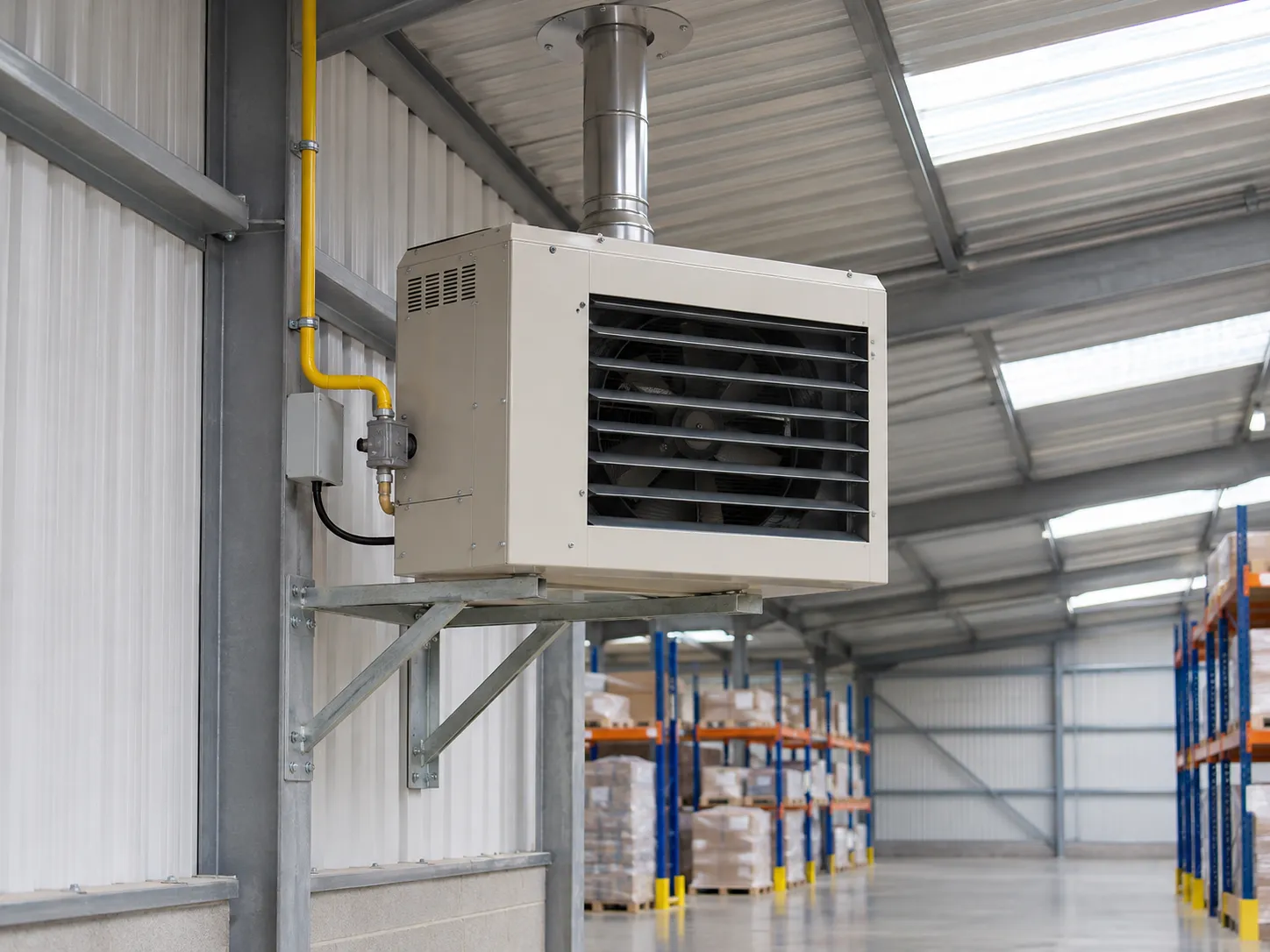
Some commercial premises, particularly warehouses, factories and industrial units, are not designed to maintain a consistent internal temperature.
When heating systems are switched off over weekends, Christmas holidays or extended closures, internal temperatures can fall considerably.
If the building is poorly insulated, the temperature inside can approach freezing point, particularly during prolonged cold spells.

This can create several problems:
- Condensation forming inside electrical equipment.
- Moisture accumulating around sensitive components.
- Dust and other contaminants building up inside smoke detectors.
- Increased risk of unwanted fire alarm activations.
In manufacturing environments, where dust is generated regularly, these conditions can become particularly challenging.
The important point is that fire alarm detectors operate within an environment, and that environment needs to be considered when designing, installing and maintaining the system.
4. What Do British Standards Say About Fire Alarm Systems?
Fire alarm systems in commercial and industrial premises should be designed, installed, commissioned and maintained in accordance with recognised British Standards.
There are several standards worth understanding.
BS 5839-1:2025: Fire Detection and Fire Alarm Systems
BS 5839-1:2025 is the current British Standard covering the design, installation, commissioning and maintenance of fire detection and fire alarm systems in non-domestic premises. It took effect on 30 April 2025, replacing the 2017 edition.
The standard provides recommendations covering:
- Selection and positioning of automatic fire detectors.
- Environmental conditions affecting detector performance.
- Maintenance and inspection requirements.
- Investigation and reduction of unwanted fire alarm signals.
- Responsibilities of building owners, occupiers and system users.
The latest 2025 edition also includes updated guidance on extensions and modifications to existing fire alarm systems.
For industrial premises, careful consideration should be given to the environment in which detectors are installed, including dust levels, temperature variations and other potential sources of unwanted activation.
BS EN 54-7: Point-Type Smoke Detectors
BS EN 54-7 specifies requirements for point-type smoke detectors that operate using scattered light, transmitted light or ionisation.
Optical smoke detectors used in commercial fire alarm systems should comply with the relevant product standard.
However, compliance with the product standard does not automatically mean that a particular detector is suitable for every environment.
The detector must also be appropriate for the conditions in which it is installed.
BS EN 54-5: Heat Detectors
In certain environments, heat detection may be more appropriate than optical smoke detection.
BS EN 54-5 covers point-type heat detectors.
For example, in areas where dust or manufacturing processes create conditions that could result in unwanted smoke detector activations, an alternative detection solution may need to be considered.
However, changing from smoke detection to heat detection must always follow a proper assessment of the fire risks and the building’s fire detection strategy.
It is important not to compromise early fire detection simply to reduce unwanted alarms.
BS 9999: Fire Safety in the Design, Management and Use of Buildings
BS 9999 provides recommendations and guidance on fire safety management, building design and the safe use of non-domestic premises.
This includes the importance of maintaining appropriate fire safety arrangements throughout the life of a building, during and after business hours.
Building owners and responsible persons should consider how building conditions, maintenance arrangements and operational procedures affect overall fire safety.
British Standards are codes of practice and technical standards, rather than legislation in themselves. However, they provide important guidance for achieving and maintaining appropriate fire safety arrangements.
5. How Can Businesses Prevent Unwanted Fire Alarm Activations?
There are several practical steps that building owners and facilities managers can take to reduce the likelihood of unwanted fire alarm activations during winter.
1. Improve Building Insulation
Poor insulation allows internal temperatures to fluctuate significantly.
Improving insulation can help maintain a more stable internal environment and reduce the likelihood of freezing conditions.
2. Maintain a Minimum Internal Temperature
Consider installing an automatic heating control system that maintains a minimum temperature when the premises are closed.
This can be particularly useful during weekends, Christmas holidays and extended shutdowns.
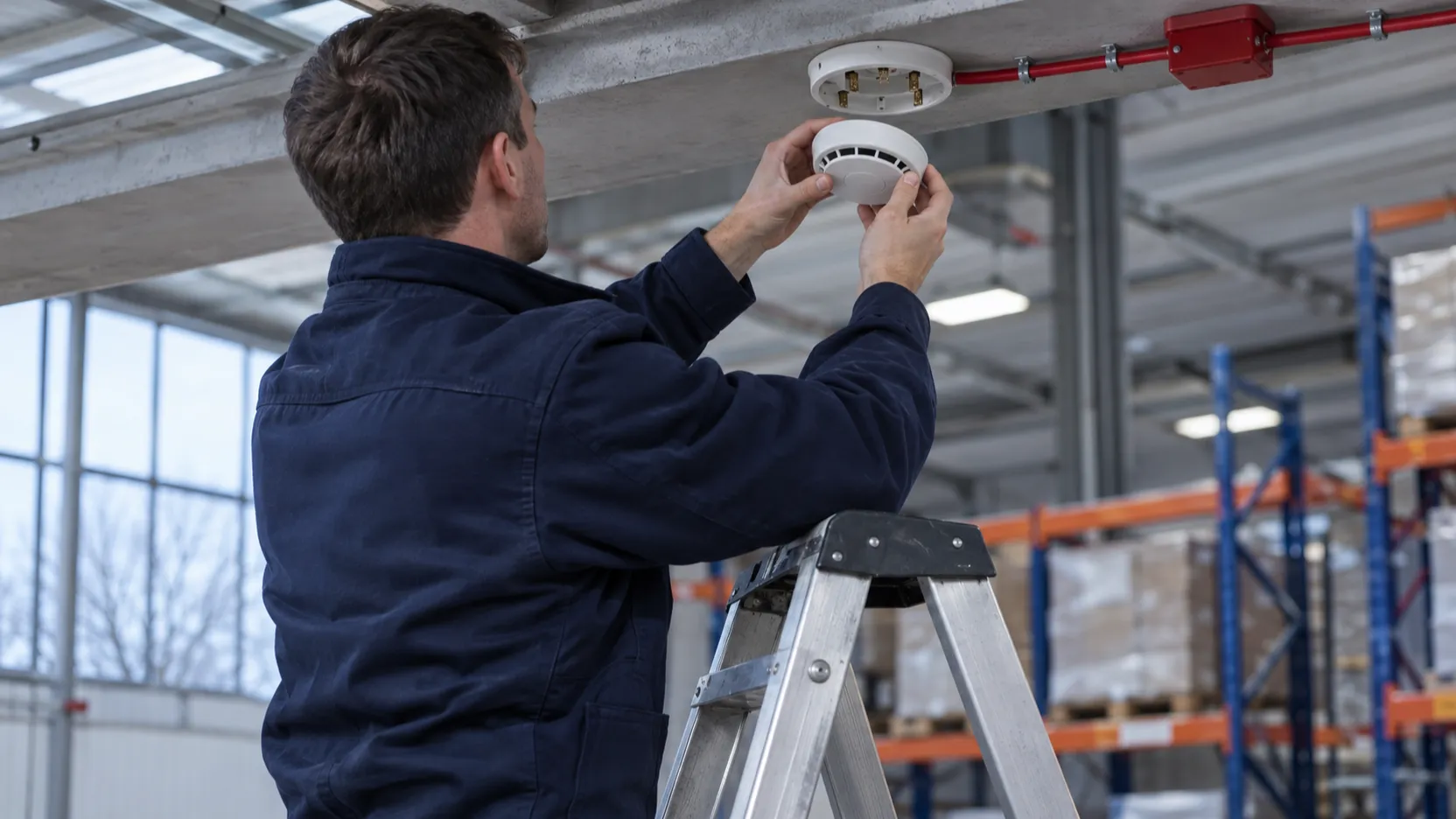
3. Arrange Regular Fire Alarm Maintenance
Fire alarm detectors should be inspected, tested and maintained in accordance with BS 5839-1:2025 and the manufacturer’s recommendations.
Where unwanted activations occur repeatedly, the affected detector should be investigated rather than simply resetting the system.
4. Consider the Environment When Selecting Detectors
Not every detector is suitable for every environment.
Areas exposed to dust, temperature fluctuations, moisture or industrial processes may require a different detection solution.
A competent fire alarm specialist can assess the environment and recommend suitable detection equipment.
5. Investigate Recurring False Alarms
If your fire alarm repeatedly activates without an identifiable fire, do not simply accept it as a nuisance.
The scale of the problem is significant. Fire and rescue services in England attended 171,935 fire false alarms due to apparatus in the year ending June 2025, according to official fire and rescue incident statistics.
Repeated unwanted activations can result in:
- Unnecessary emergency call-outs.
- Disruption to business operations.
- Unnecessary attendance by the fire brigade.
- Loss of confidence in the fire alarm system.
More importantly, repeated unwanted alarms can encourage people to ignore alarms or disable detectors, potentially compromising fire safety.
The underlying cause needs to be identified and addressed.
Any temporary isolation of a detector must be properly managed, recorded and accompanied by appropriate alternative fire safety precautions until the detector is reinstated.
6. How IDS Global Can Help
At IDS Global, we provide professional fire alarm installation, servicing, maintenance and emergency response services for commercial and residential premises.
Our engineers investigate unwanted fire alarm activations, identify potential causes and recommend practical solutions to help keep systems operating reliably.
We work with a variety of commercial environments, including:
- Warehouses and distribution centres.
- Manufacturing facilities and factories.
- Retail premises and shopping units.
- Offices and commercial buildings.
- Residential and mixed-use developments.
As winter approaches, we encourage building owners and facilities managers to consider whether their premises are adequately protected against cold temperatures, condensation and environmental contamination.
A fire alarm system needs to be reliable throughout the year, not just when the building is occupied.
Don’t wait for an emergency call-out to discover that environmental conditions are affecting your fire alarm system.
If you are experiencing recurring unwanted fire alarm activations, or would like your system inspected before winter, get in touch with IDS Global.
Call us on 0203 761 1716 or request a callback today.