If you’re responsible for a commercial building in the UK, you are legally required to have a fire risk assessment. Not a suggestion — a legal obligation under the Regulatory Reform (Fire Safety) Order 2005. Despite this, many business owners either don’t have one, haven’t updated theirs in years, or don’t fully understand what one involves.
This guide covers what a fire risk assessment actually is, who needs one, what happens during the process, and what the consequences are if you get it wrong.
Who Needs a Fire Risk Assessment?
The short answer: almost every non-domestic premises in England and Wales. This includes:
- Offices and commercial buildings
- Shops and retail premises
- Warehouses and industrial units
- Houses in multiple occupation (HMOs)
- Communal areas of residential blocks
- Pubs, restaurants, and hospitality venues
- Schools, nurseries, and care homes
- Churches, village halls, and community centres
If people work in the building, visit it, or live in it as part of a multi-occupancy arrangement, it needs a fire risk assessment. The only exemptions are single private dwellings.
The Responsible Person — usually the employer, building owner, landlord, or managing agent — is legally accountable for making sure the assessment is carried out and kept up to date.
What Does a Fire Risk Assessment Involve?
A fire risk assessment is a structured evaluation of your premises to identify fire hazards, assess who might be at risk, and determine whether your existing fire safety measures are adequate. It follows a methodical process.
Step 1: Identify Fire Hazards
The assessor examines your premises for potential sources of ignition, fuel, and oxygen — the three elements needed for a fire to start. Common hazards include:
- Electrical equipment — overloaded sockets, damaged cables, portable heaters
- Cooking and heating appliances — kitchens, boiler rooms, server rooms
- Flammable materials — cleaning products, paper storage, waste bins, packaging
- Smoking areas — improperly managed smoking zones near the building
- Hot works — welding, soldering, or other maintenance activities that produce sparks
Step 2: Identify People at Risk
Not everyone in your building can respond to a fire in the same way. The assessment considers:
- Employees working alone or in isolated areas — may not hear an alarm
- Visitors and contractors — unfamiliar with the building layout and escape routes
- People with disabilities — may need assistance with evacuation
- Night workers or shift staff — reduced occupancy can mean slower detection
- Young workers or trainees — may lack fire safety awareness
Step 3: Evaluate, Remove, or Reduce Risks
Based on the hazards and people identified, the assessor evaluates whether your current fire safety measures are sufficient. This covers:
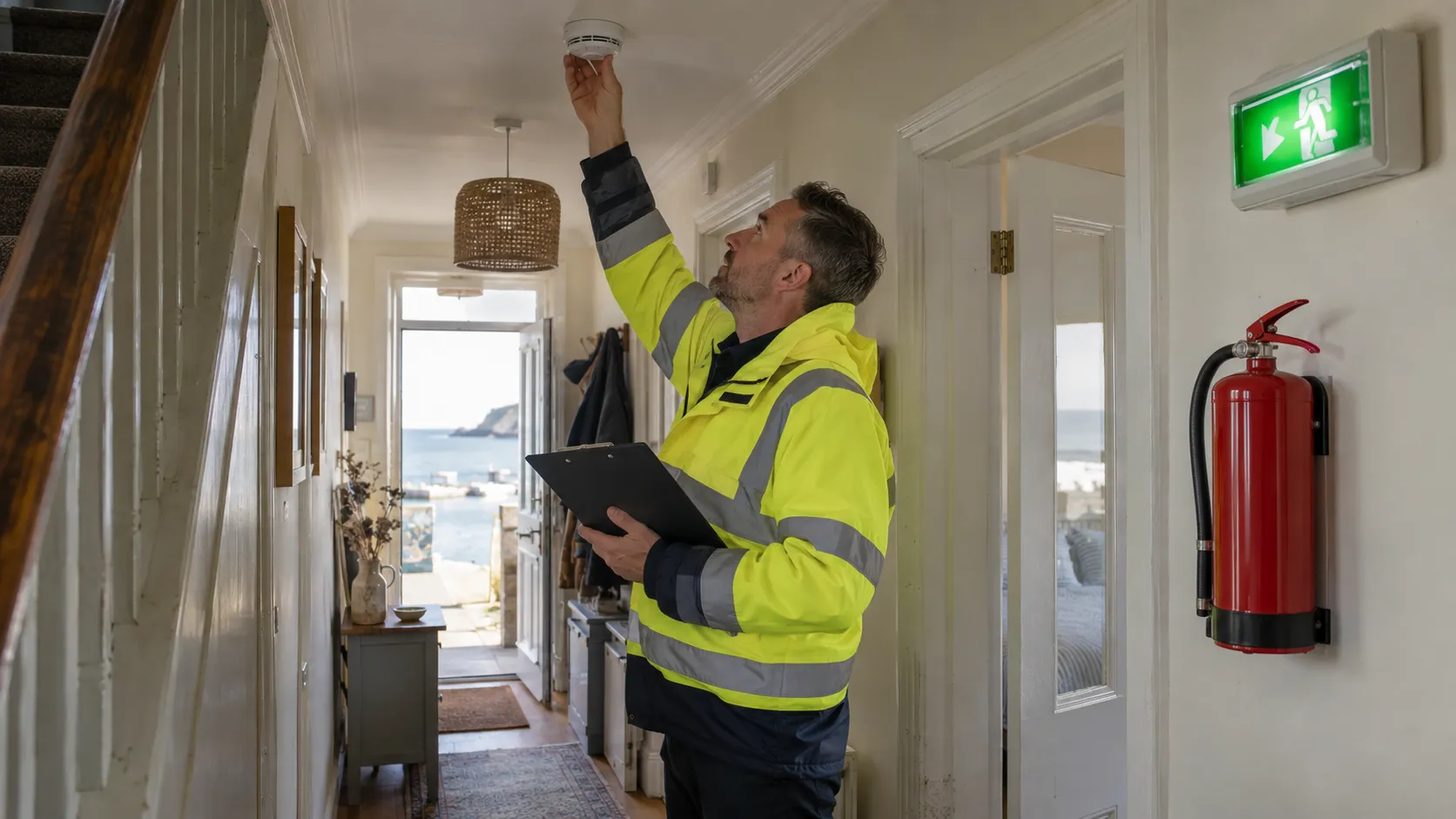
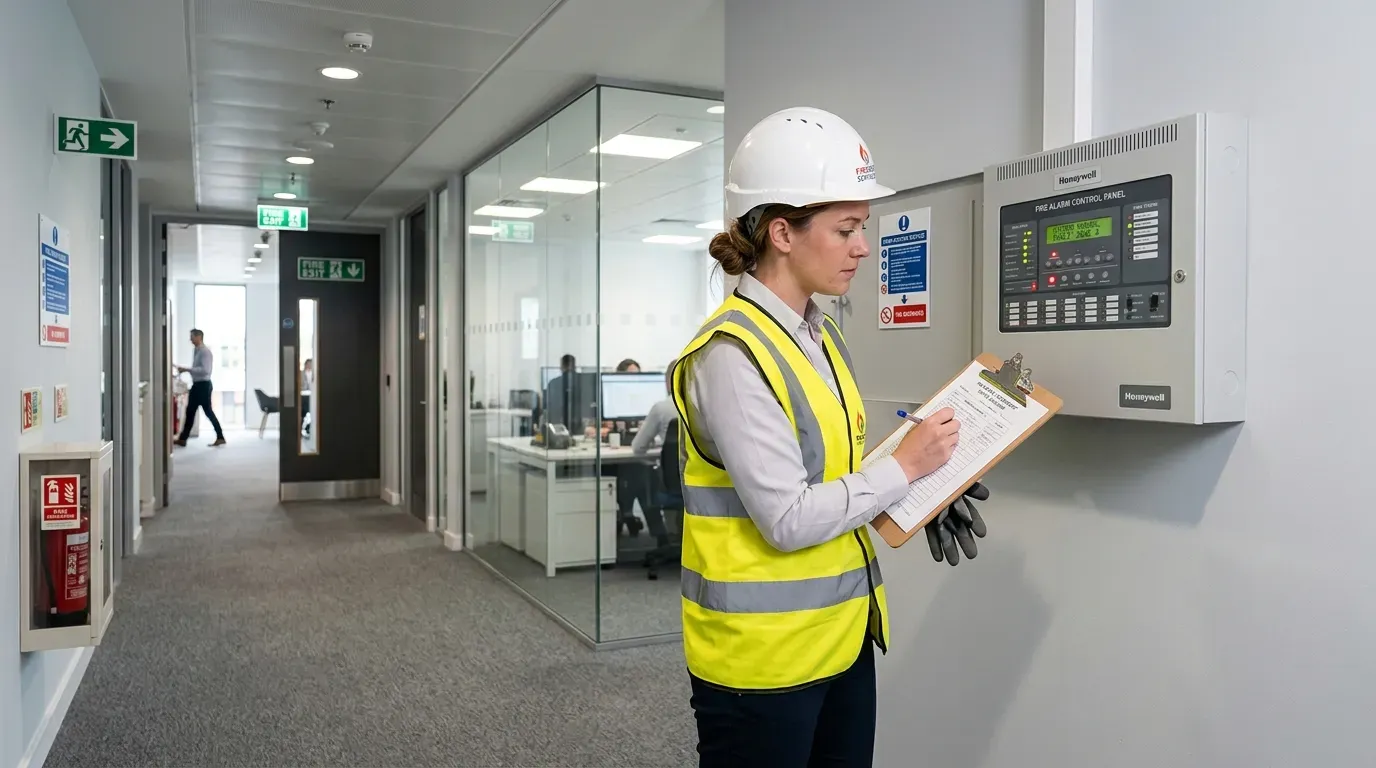
- Detection and warning — are your fire alarms adequate for the size and layout of the building? Do they comply with BS 5839?
- Escape routes — are all exits clearly marked, unobstructed, and adequately lit?
- Fire doors — are they correctly rated, properly maintained, and self-closing?
- Firefighting equipment — are extinguishers the right type, in the right locations, and in date for servicing?
- Emergency planning — do you have a documented evacuation plan? Is it practised regularly?
- Staff training — do employees know what to do if the alarm sounds?
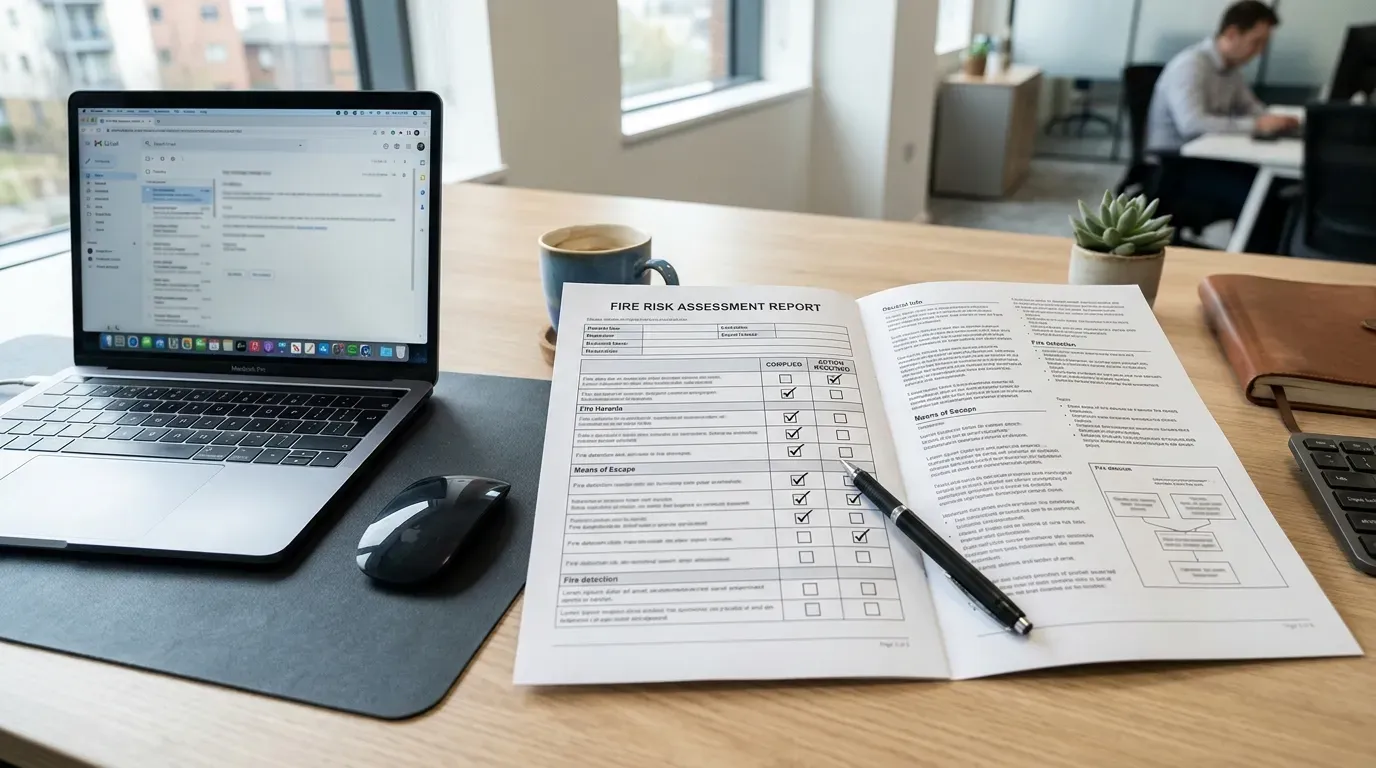
Step 4: Record, Plan, and Train
The assessment must be recorded in writing if your business has five or more employees — though it’s best practice regardless of size. The written record should include:
- The hazards identified
- Who is at risk and why
- What measures are in place
- What further action is needed
- A timeline for completing any remedial work
The Responsible Person must then act on the findings, implement improvements, and ensure staff receive appropriate fire safety training.
Step 5: Review Regularly
A fire risk assessment is not a one-off exercise. It should be reviewed:
- At least annually as a general rule
- After any significant changes to the building layout, use, or occupancy
- After a fire or near-miss incident
- When new hazards are introduced — new equipment, materials, or processes
Common Findings That Catch Businesses Out
Having carried out fire risk assessments across commercial premises, offices, and HMOs for years, certain issues come up repeatedly. Many of them are straightforward to fix once identified — but they can have serious consequences if left unchecked.
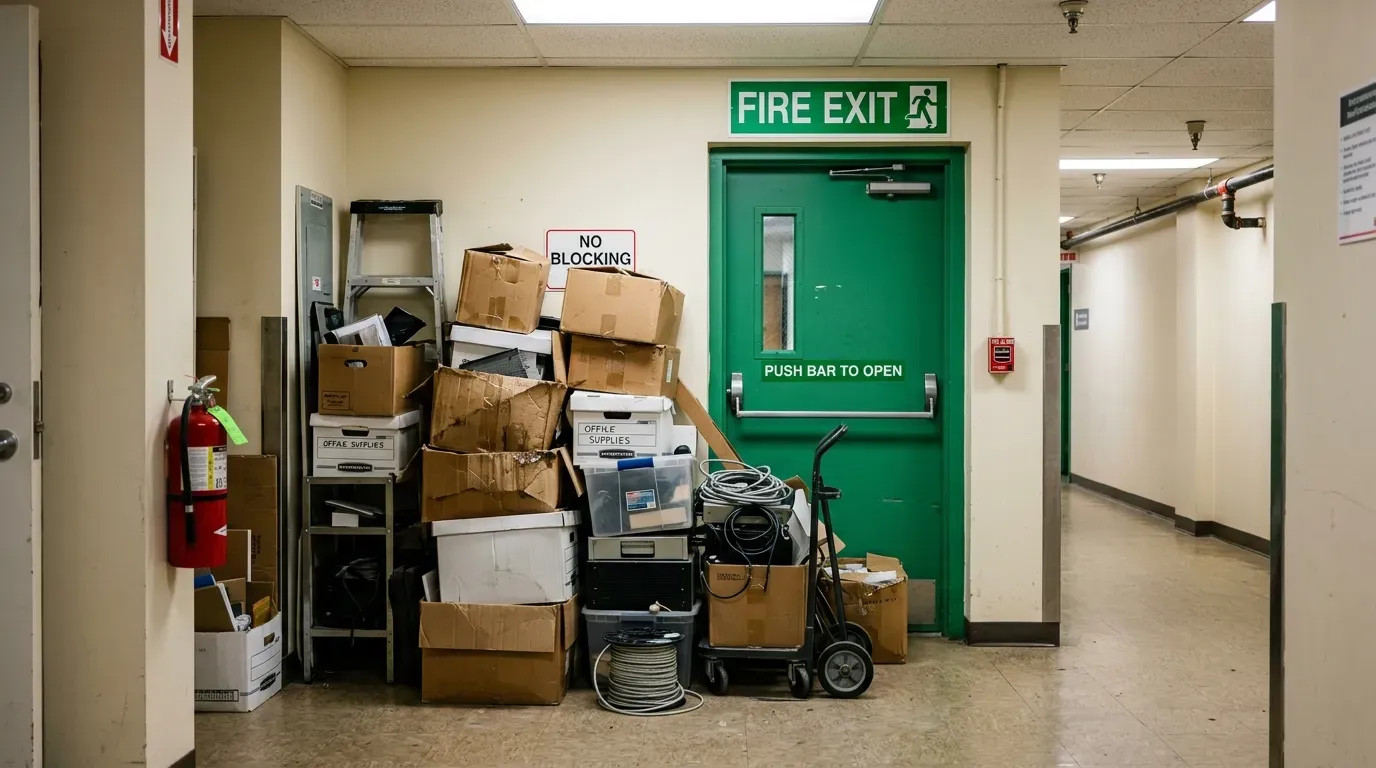
Blocked or Obstructed Fire Exits
One of the most common and most dangerous findings. Storage overflow, delivery pallets, or even well-meaning staff propping doors open can turn a clear escape route into a dead end during an emergency.
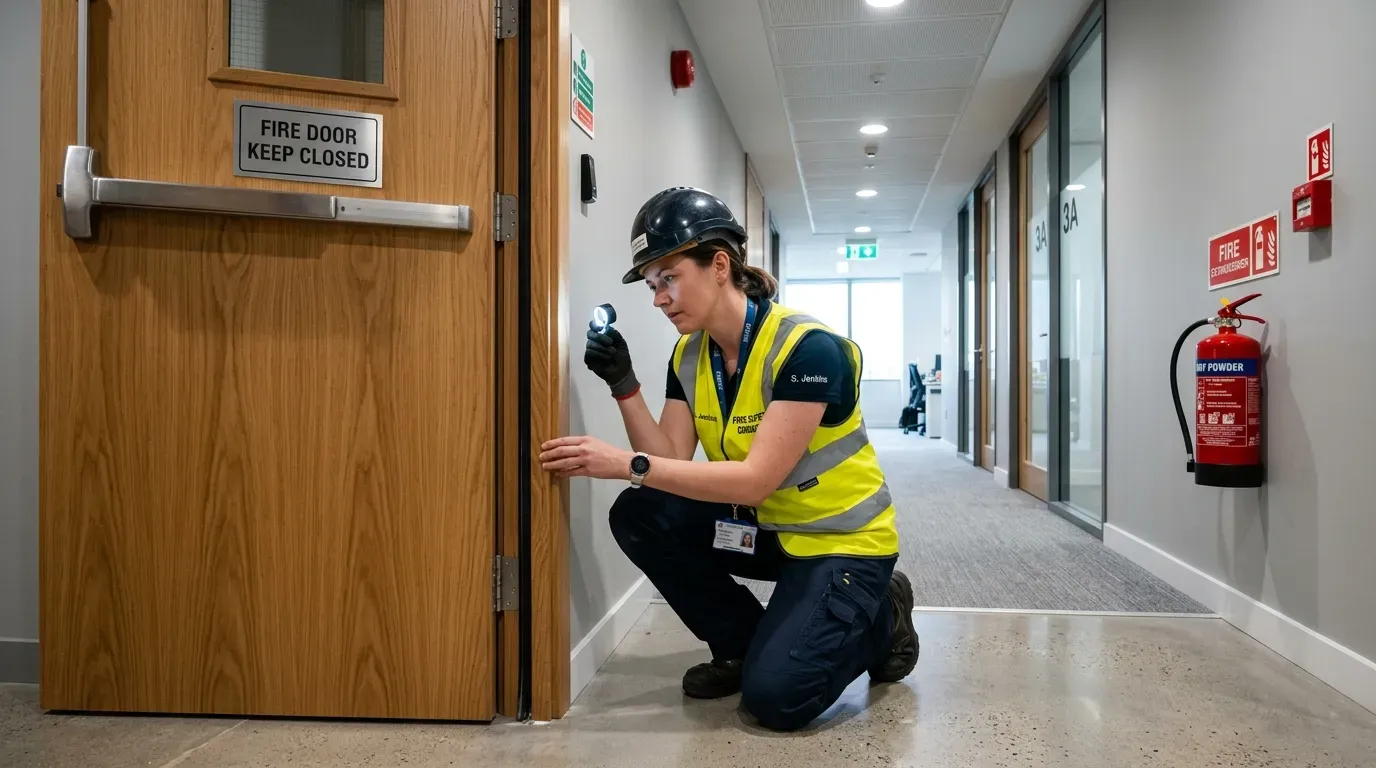
Fire Doors Propped Open or Damaged
Fire doors are designed to contain fire and smoke for a rated period — typically 30 or 60 minutes. A fire door wedged open with a bin or a doorstop offers zero protection. Similarly, doors with damaged seals, broken closers, or gaps around the frame won’t perform as intended.
Missing or Expired Fire Extinguishers
Extinguishers need annual servicing under BS 5306. It’s not uncommon to find extinguishers that haven’t been checked in years, are the wrong type for the hazards present, or have been moved from their designated locations.
No Documented Evacuation Plan
Many businesses have fire alarms and extinguishers but no written plan for how people should actually evacuate. Who calls the fire brigade? Where is the assembly point? Who checks that everyone is out? Without a plan, an orderly evacuation becomes a chaotic scramble.
Inadequate Fire Detection
A single smoke detector in a large open-plan office does not constitute an adequate fire detection system. The type, number, and placement of detectors must match the size, layout, and risk profile of the building — as specified in BS 5839 Part 1.
What Happens If You Don’t Have One?
The consequences of not having a suitable and sufficient fire risk assessment range from enforcement notices to criminal prosecution:
- Informal advice — the fire service may issue guidance on minor issues
- Enforcement notice — a formal notice requiring you to address specific failings within a set timeframe
- Prohibition notice — if the risk is severe enough, the fire service can prohibit use of all or part of your premises immediately
- Prosecution — failure to comply with fire safety law can result in unlimited fines and, in the most serious cases, imprisonment
Beyond legal penalties, inadequate fire safety can invalidate your building insurance. If a fire occurs and your insurer finds that you didn’t have a valid fire risk assessment or failed to act on its recommendations, they may refuse to pay out.
The Regulatory Reform (Fire Safety) Order 2005 places the responsibility squarely on the Responsible Person. Ignorance of the requirement is not a defence.
DIY vs. Professional Assessment
There is no legal requirement for a fire risk assessment to be carried out by an external professional. The Responsible Person can do it themselves, provided they are competent to do so. In practice, this works for very small, simple premises — a small office with a handful of staff, for example.
For most commercial buildings, a professional assessment is the safer choice. A qualified fire risk assessor will:
- Identify hazards that a non-specialist might overlook
- Understand the relevant British Standards (BS 5839, BS 5306, BS 9999)
- Provide a legally defensible written report
- Recommend proportionate, practical improvements
- Offer follow-up support to help you implement changes
The cost of a professional assessment is modest compared to the cost of non-compliance — or the cost of a fire that could have been prevented.
Getting Your Assessment Done Right
At IDS Global, we carry out fire risk assessments for commercial premises, offices, HMOs, and multi-occupancy buildings across London and the surrounding areas. Our assessments are thorough, practical, and written in plain language — not a box-ticking exercise that sits in a drawer.
We also handle the follow-through: if your assessment identifies issues with your fire alarms, fire doors, extinguishers, or emergency lighting, we can carry out the remedial work and ongoing maintenance to bring everything up to standard.
If your fire risk assessment is overdue — or you’ve never had one — get in touch to book a survey. It’s one of the most straightforward steps you can take to protect your people, your property, and your business.