Fire Doors
Fire-rated door installation, inspection, and maintenance to ensure compartmentation integrity.
Why are fire doors so important?
Fire doors are a critical part of a building's passive fire protection. Their job is to compartmentalise a building — containing fire and smoke within a specific area to slow its spread, protect escape routes, and give occupants time to evacuate safely.
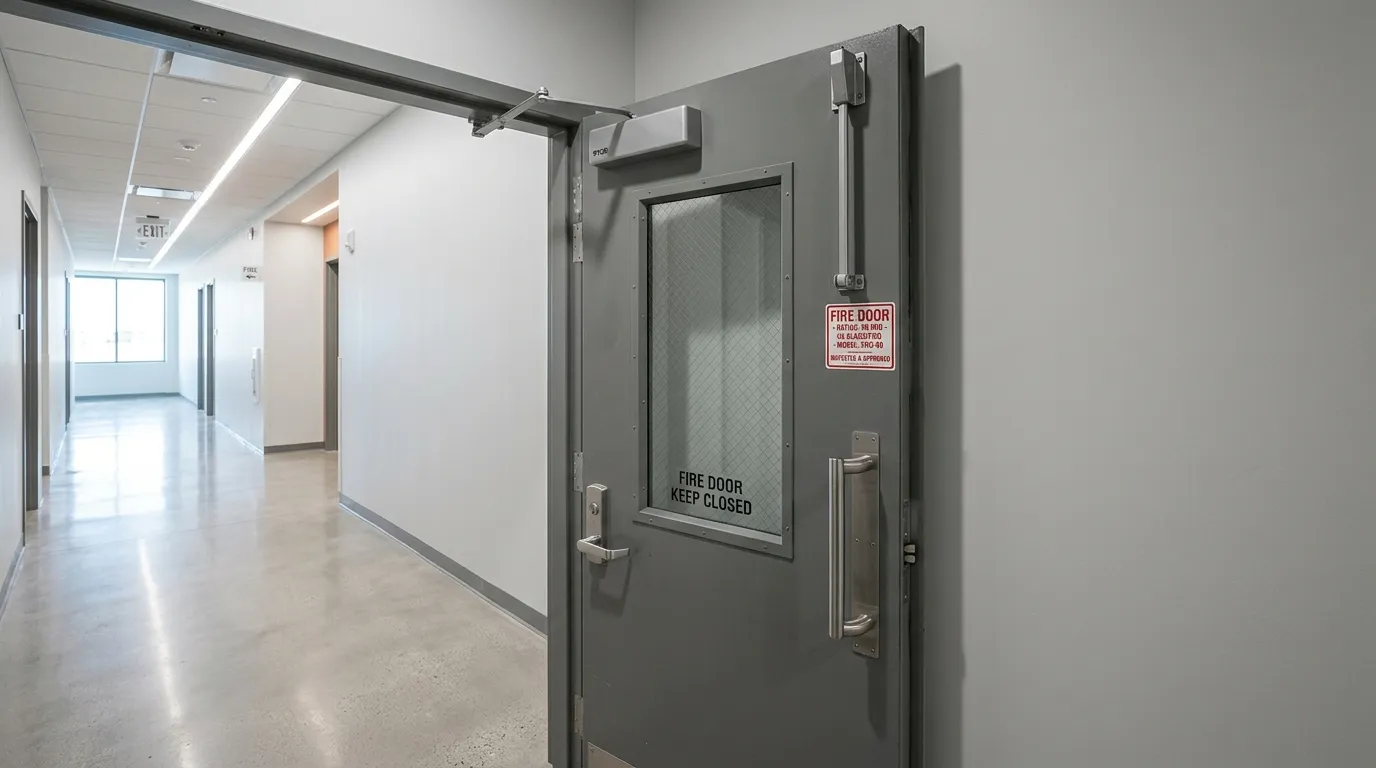
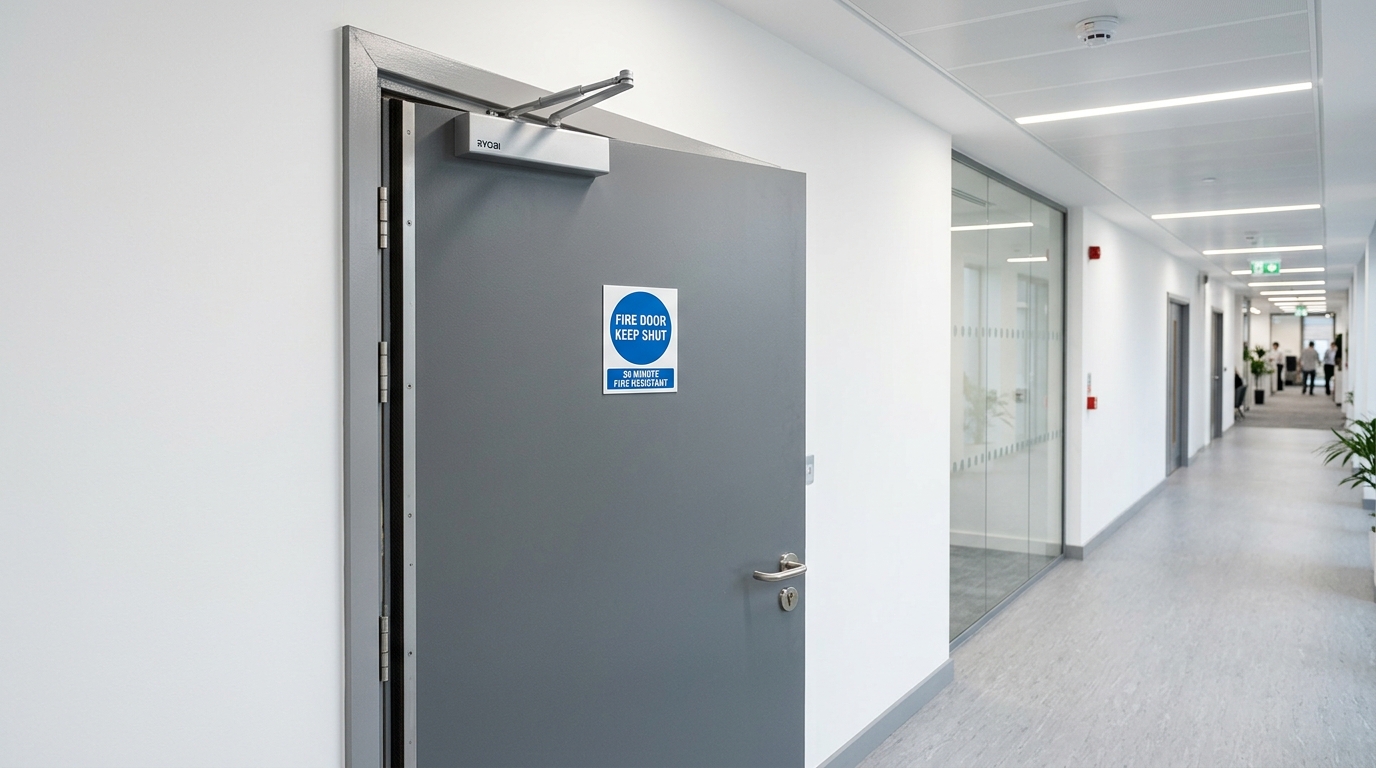
A fire door is not just a heavy door. It is a tested, certified assembly that includes the door leaf, frame, intumescent seals, smoke seals, hinges, and self-closing device — all working together to provide a specified period of fire resistance. If any component is damaged, missing, or incorrectly installed, the door may fail when it matters most.
Fire Door Ratings Explained
Fire doors are rated by the number of minutes they can resist fire penetration under test conditions:
- FD30 (30 minutes) — The minimum standard for most commercial and residential applications. Required on escape routes, between flats and communal areas in HMOs, and between rooms and corridors in offices.
- FD60 (60 minutes) — Required in higher-risk areas such as kitchens, boiler rooms, storage areas with high fire loads, and certain positions in high-rise buildings.
- FD90 and FD120 — Used in specialist applications such as plant rooms, industrial premises, and buildings with specific compartmentation requirements identified in the fire risk assessment.
The "S" suffix (e.g., FD30S) indicates the door also has smoke seals, providing protection against cold smoke. Most building regulations and fire risk assessments now require smoke seals as standard on fire doors in escape routes.
Legal Requirements
Fire doors are required by several pieces of legislation and guidance:
- Building Regulations Approved Document B — Sets out where fire doors are required in new buildings and major refurbishments, including the minimum fire rating for each location.
- Regulatory Reform (Fire Safety) Order 2005 — Requires the responsible person to maintain fire doors as part of the building's fire safety measures. Defective fire doors identified in a fire risk assessment must be repaired or replaced.
- Fire Safety Act 2021 and Fire Safety (England) Regulations 2022 — Introduced after the Grenfell Tower inquiry. Requires building owners of residential buildings over 11 metres to carry out quarterly checks of all fire doors in communal areas and annual checks of flat entrance doors.
- Housing Act 2004 (HMOs) — Licensing conditions for HMOs typically require FD30S fire doors on all bedrooms and kitchens, with self-closing devices fitted.
Fire Door Inspection: What We Check
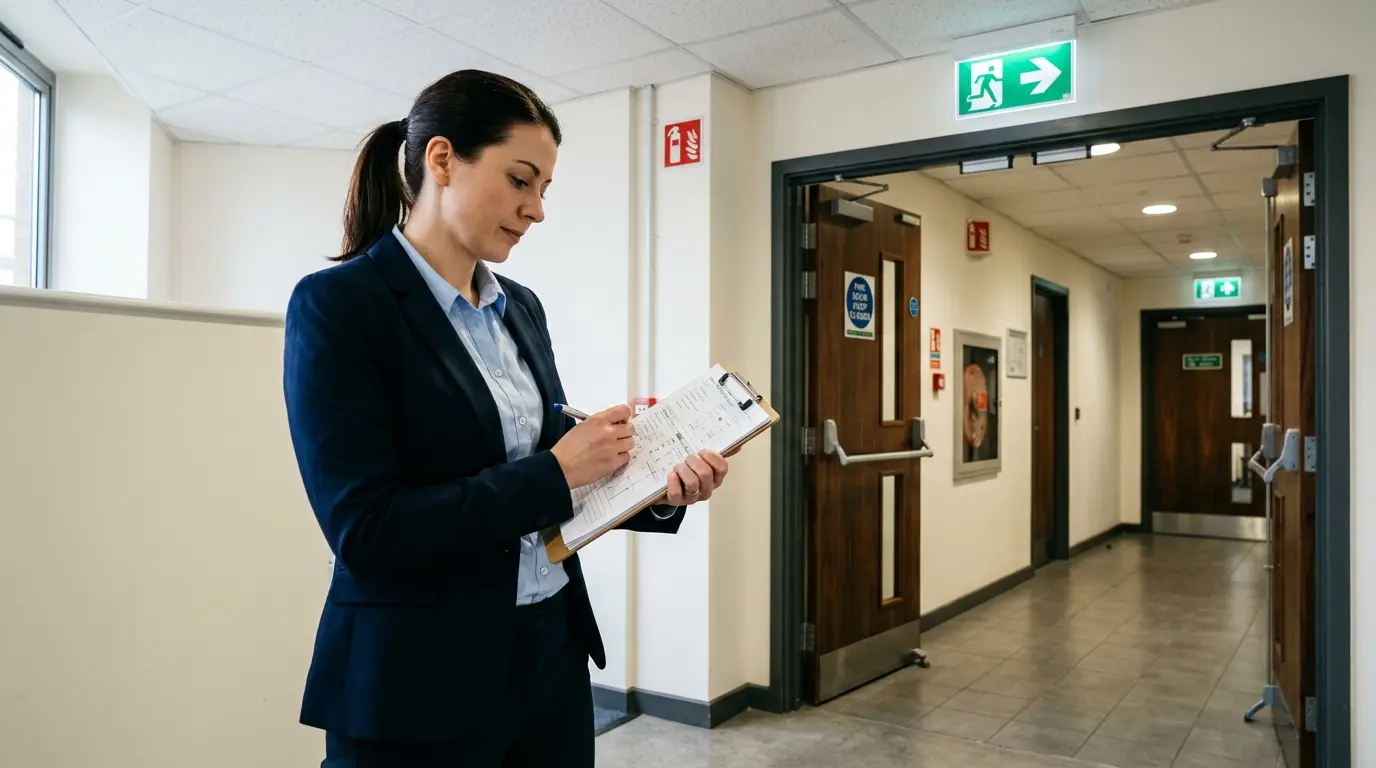
A fire door inspection is a systematic check of every component. Our inspectors assess:
- Door leaf condition — No holes, cracks, warping, or damage that could compromise fire resistance. The certification label or plug must be present.
- Gaps and seals — The gap between the door and frame must be 3mm or less (when closed). Intumescent strips and smoke seals must be intact, continuous, and undamaged.
- Self-closing device — The door must close fully into the frame from any open angle without manual assistance. Overhead closers must be correctly adjusted.
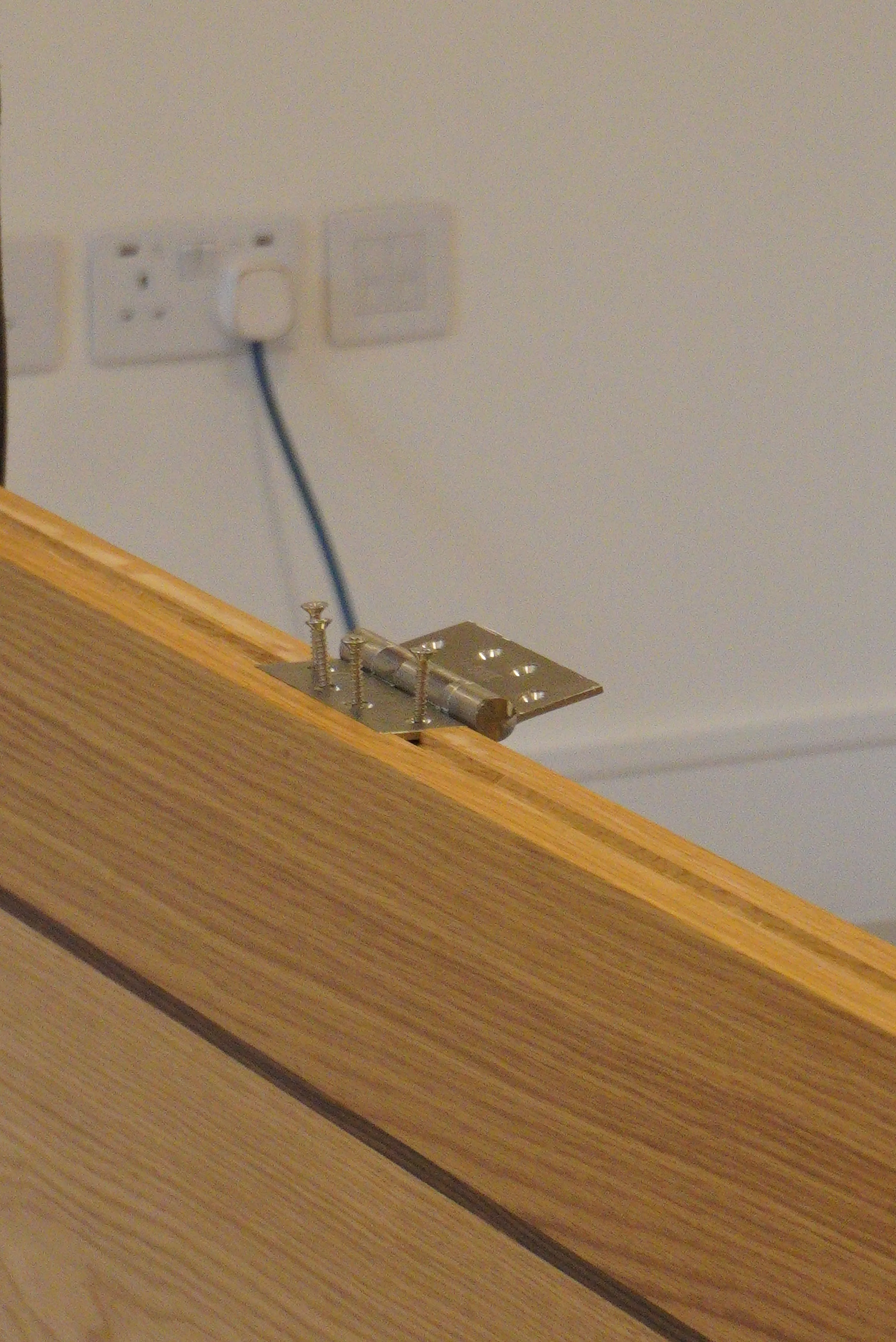
- Hinges — A minimum of three CE-marked fire-rated hinges. No missing screws, no damage, no non-fire-rated replacements.
- Frame and threshold — The frame must be securely fixed to the wall with no gaps that would allow fire or smoke passage.
- Signage — "Fire door keep shut" or "Fire door keep locked" signs must be displayed where required.
Each inspected door receives a pass or fail outcome. Failed doors are documented with photographs and a clear description of the defect, and we provide a prioritised repair or replacement plan.
Installation and Remedial Work
We install new fire door sets and carry out remedial work on existing doors. This includes fitting new intumescent and smoke seals, replacing damaged door leaves, installing or adjusting self-closing devices, fitting correct hinges, and ensuring the frame and threshold meet the required standards.
All doors we install are third-party certified (BWF Fire Door Alliance or equivalent) and come with full documentation for your compliance records. We do not fit uncertified doors — there is no way to verify the fire rating of an uncertified door, and it will not satisfy a fire risk assessment or building regulations inspection.

Frequently Asked Questions
How often should fire doors be inspected?
For residential buildings over 11 metres, the Fire Safety (England) Regulations 2022 require quarterly checks of communal fire doors and annual checks of flat entrance doors. For commercial premises, fire doors should be checked as part of your regular fire risk assessment review — at least annually.
Can a damaged fire door be repaired?
It depends on the damage. Minor issues like replacing seals, adjusting closers, or fitting new hinges can be repaired. Significant damage to the door leaf — holes, cracks, or warping — usually requires replacement, as the fire rating cannot be guaranteed once the leaf is compromised.
What is an intumescent seal?
An intumescent seal is a strip fitted into the edge of the door or frame that expands when exposed to heat. It swells to fill the gap between the door and frame, blocking fire and hot gases from passing through. Most fire doors also have a separate smoke seal to block cold smoke.
Do fire doors need to be self-closing?
Yes. All fire doors in commercial premises and communal areas of residential buildings must be fitted with a self-closing device that returns the door to the fully closed position. Propping fire doors open is illegal unless they are held open by an automatic release mechanism linked to the fire alarm.