Fire Risk Assessments
Comprehensive fire risk assessments for commercial premises and HMOs, compliant with the Regulatory Reform (Fire Safety) Order 2005.
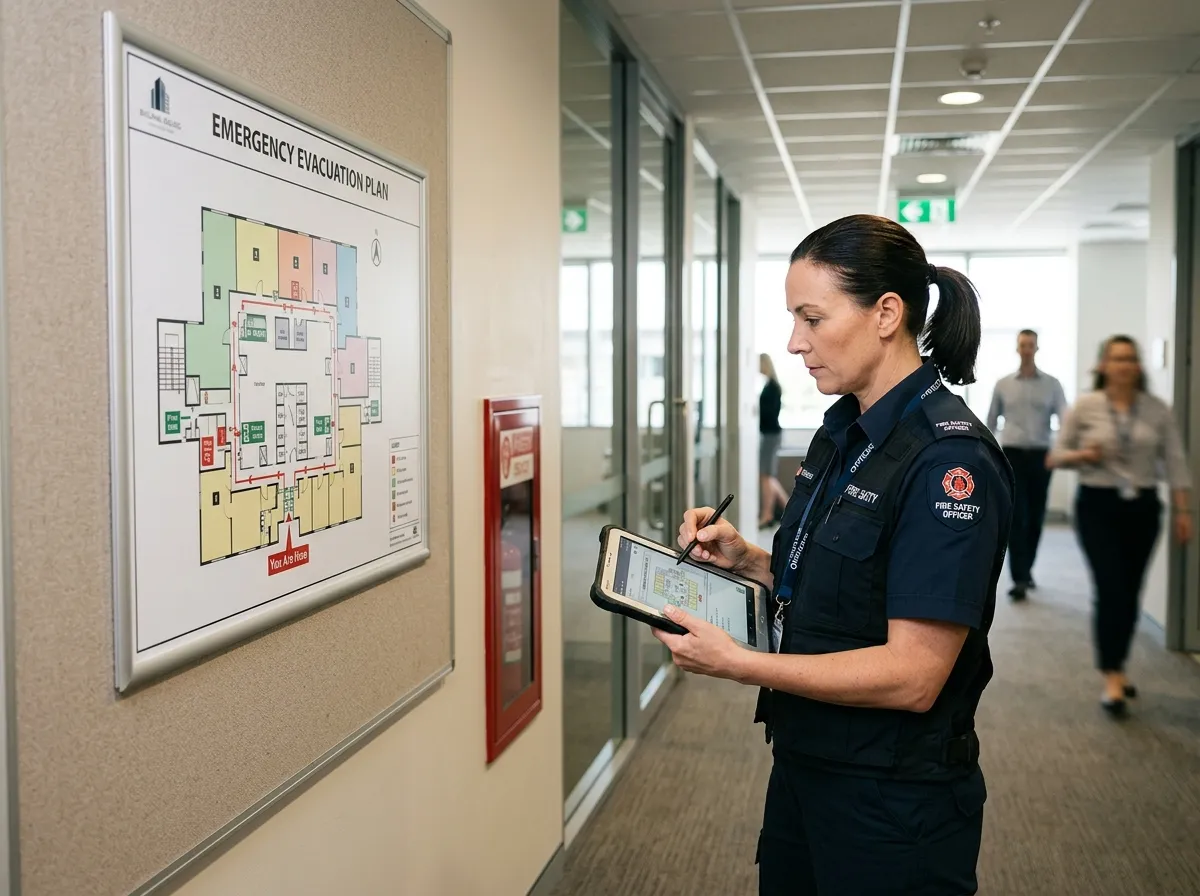
What is a fire risk assessment?
A fire risk assessment is a structured evaluation of your premises to identify fire hazards, assess who might be at risk, and determine whether your existing fire safety measures are adequate. It is not a tick-box exercise — it is a legal requirement that directly affects the safety of everyone who enters your building.
Under the Regulatory Reform (Fire Safety) Order 2005, the "responsible person" for any non-domestic premises in England and Wales must carry out a suitable and sufficient fire risk assessment. This applies to offices, shops, warehouses, HMOs, factories, care homes, schools, and any workplace or premises where people gather.
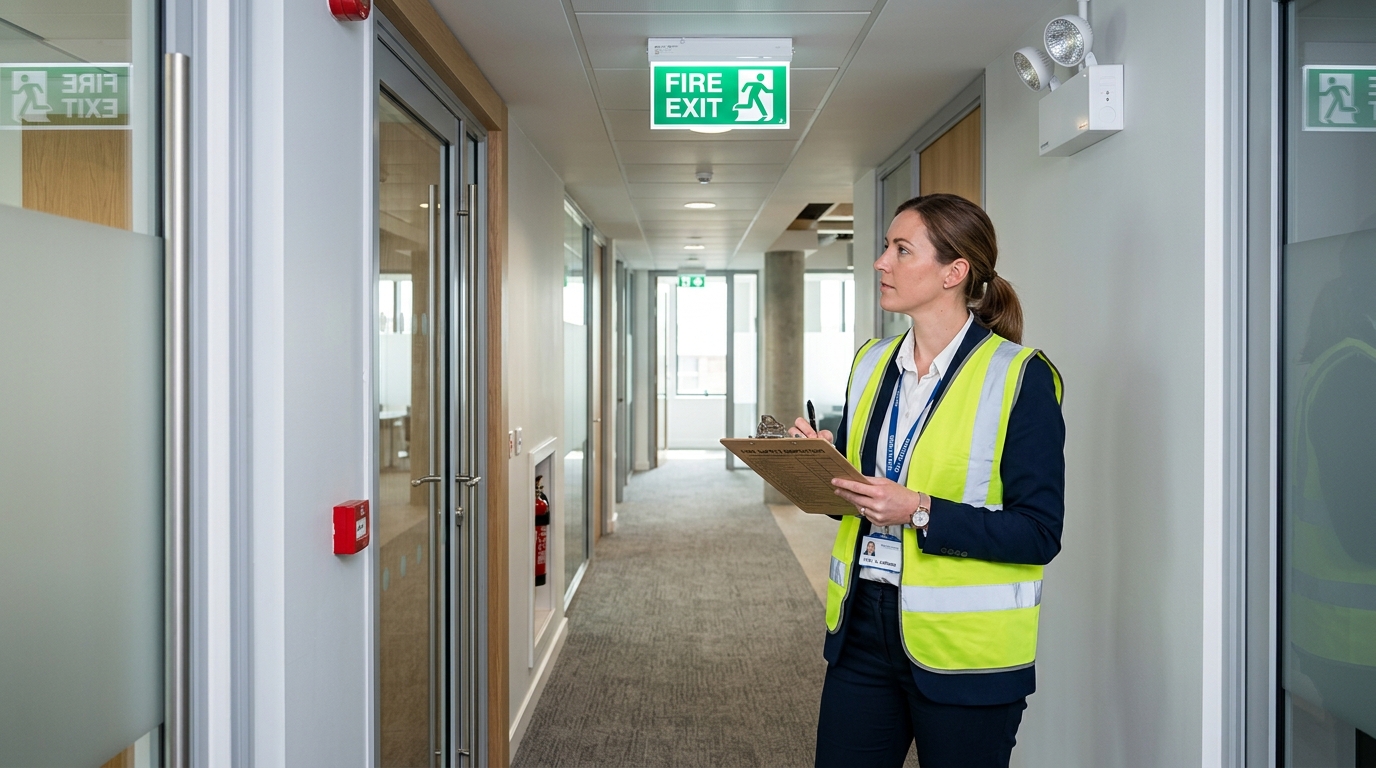
Who Is the Responsible Person?
The responsible person is typically the employer, building owner, landlord, or managing agent — whoever has control over the premises. If you are the responsible person, the fire risk assessment is your legal duty. You cannot delegate the responsibility itself, even if you hire someone else to carry out the assessment.
Failure to comply can result in enforcement notices, prohibition notices (which can close your building), and criminal prosecution. Fines are unlimited, and in serious cases, custodial sentences can be imposed.
What Does a Fire Risk Assessment Cover?
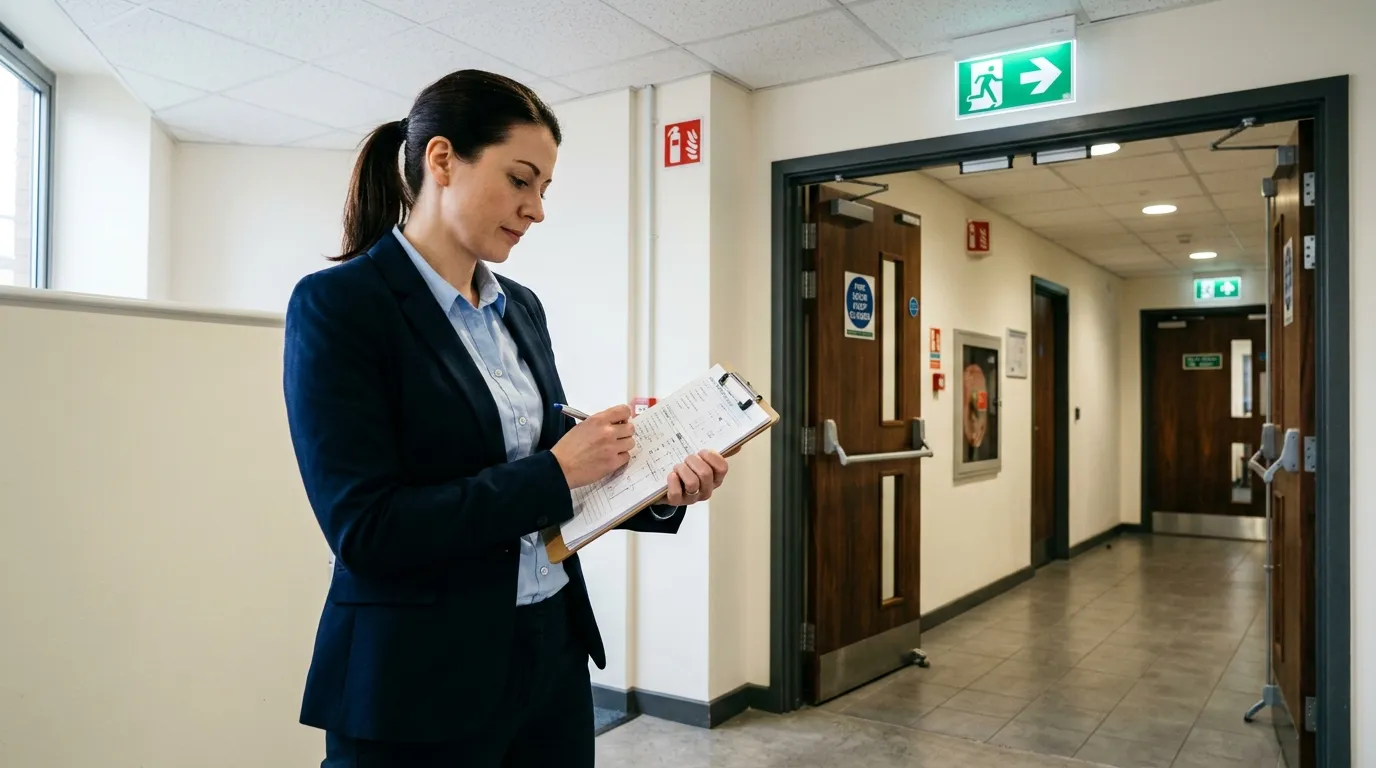
A compliant fire risk assessment follows a methodical process. Our assessors examine every aspect of fire safety in your building:
- Identify fire hazards — Sources of ignition (electrical equipment, cooking, heating), sources of fuel (paper, textiles, flammable liquids, waste), and sources of oxygen (air conditioning, oxygen supplies in medical settings).
- Identify people at risk — Employees, visitors, contractors, and anyone who may be especially vulnerable: people with disabilities, lone workers, sleeping occupants in HMOs, or those unfamiliar with the building layout.
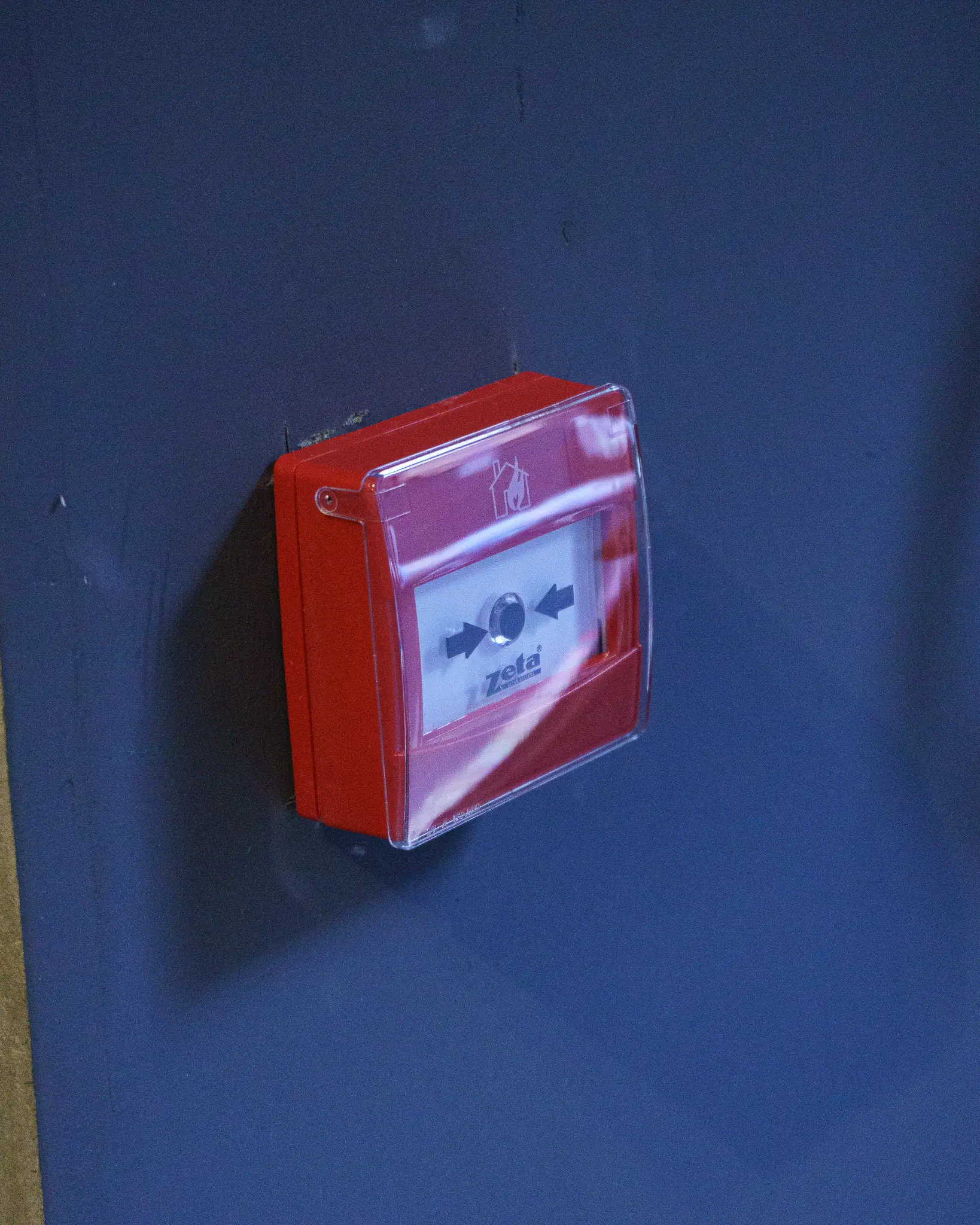
- Evaluate existing fire safety measures — Fire detection and alarm systems, emergency lighting, escape routes and exits, fire doors, extinguishers, signage, and staff training. Are they adequate for the hazards identified?
- Record findings and actions — All significant findings are documented in a written report with a clear action plan. Each recommendation is prioritised by risk level so you know what to address first.
- Review and update — A fire risk assessment is a living document. It must be reviewed regularly and updated whenever there are significant changes to the building layout, occupancy, or use.
How Often Should a Fire Risk Assessment Be Reviewed?
There is no fixed legal interval — the legislation says assessments must be reviewed "regularly" and whenever circumstances change. In practice, most fire safety professionals recommend:
- Annually — As a minimum for most commercial premises. This ensures the assessment reflects current conditions and any changes over the past 12 months.
- After any significant change — Building alterations, change of use, new tenants, increased occupancy, or introduction of new hazards (e.g., new machinery, chemical storage).
- After a fire or near-miss — Any fire incident, false alarm investigation, or near-miss should trigger an immediate review.
- After enforcement action — If the fire service issues an enforcement or deficiency notice, the assessment must be updated to address the findings.
For HMOs, many local authorities and licensing conditions require annual fire risk assessments as a condition of the licence. Landlords should check their specific obligations.
Fire Risk Assessments for HMOs
Houses in Multiple Occupation have specific fire safety obligations because residents are sleeping in a building they share with people from other households. The risks are higher: cooking in shared kitchens, blocked escape routes, residents unfamiliar with evacuation procedures, and landlords who are not always on-site.
An HMO fire risk assessment typically requires more detailed consideration of escape routes (are they adequate for all floors?), fire door provision (are they self-closing and properly rated?), detection coverage (is there interlinked detection in every room and escape route?), and emergency lighting.
If your HMO requires a licence under the Housing Act 2004, the local authority will expect to see a current, compliant fire risk assessment as part of the licensing process. An inadequate assessment — or one that is out of date — can result in licence refusal or conditions being imposed.
What Happens After the Assessment?
You receive a detailed written report covering every area of your premises. The report includes:
- Risk rating — An overall assessment of your premises' fire risk level, from low to high.
- Findings — Every hazard, deficiency, or concern identified during the assessment, with photographic evidence where relevant.
- Action plan — Prioritised recommendations ranked by urgency. Critical issues (blocked fire exits, missing detection) are flagged for immediate action. Lower-risk items are scheduled for planned improvement.
- Compliance summary — A clear statement of where your premises stand in relation to the Fire Safety Order and relevant British Standards.
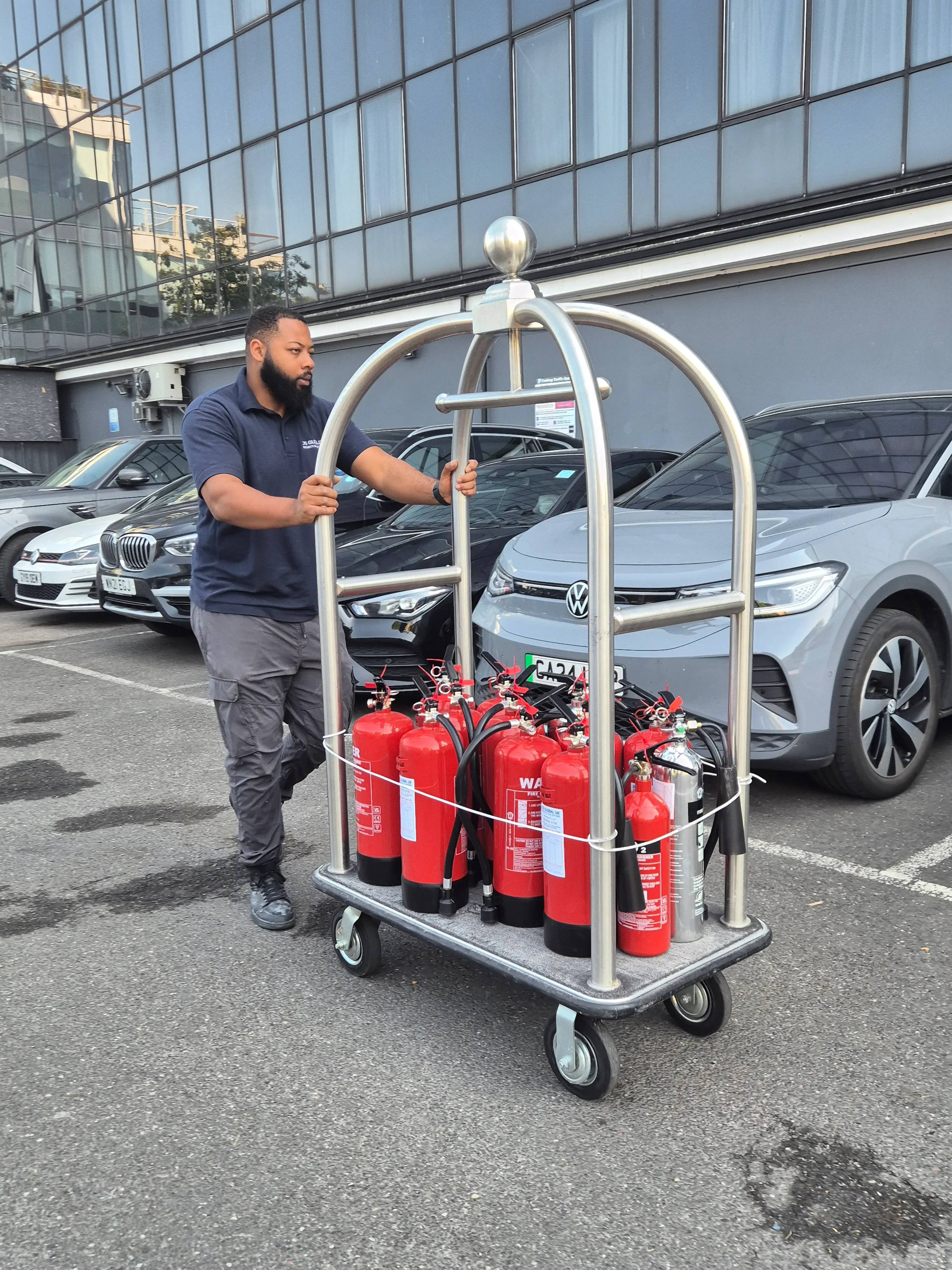
We don't just hand you a report and walk away. If the assessment identifies issues we can resolve — installing fire alarms, fitting fire doors, servicing extinguishers, or delivering staff training — we can handle the remedial work as part of the same project. One company, one point of contact, from assessment to full compliance.
Frequently Asked Questions
Is a fire risk assessment a legal requirement?
Yes. Under the Regulatory Reform (Fire Safety) Order 2005, the responsible person for any non-domestic premises in England and Wales must carry out a suitable and sufficient fire risk assessment. This includes offices, shops, warehouses, HMOs, and any premises where people work or gather.
Can I do my own fire risk assessment?
Legally, the responsible person can carry out their own assessment if they are competent to do so. However, for most commercial premises and all but the simplest buildings, appointing a qualified fire risk assessor is strongly recommended. An inadequate assessment can expose you to enforcement action and liability.
What happens if I don't have a fire risk assessment?
The fire service can issue enforcement notices requiring you to carry out an assessment within a set timeframe. In serious cases, they can issue a prohibition notice which prevents use of the building until deficiencies are addressed. Fines are unlimited, and responsible persons can face imprisonment for serious breaches.
How long does a fire risk assessment take?
It depends on the size and complexity of the premises. A small office might take 2-3 hours. A large multi-storey building, HMO block, or warehouse with complex hazards could take a full day or more. We provide a time estimate when you book your assessment.
Do you assess HMOs and residential buildings?
Yes. We carry out fire risk assessments for HMOs, blocks of flats, and residential buildings as well as commercial premises. HMOs have specific requirements around escape routes, fire doors, and detection that our assessors are experienced in evaluating.