Fire Safety Equipment
Supply, installation, and annual servicing of fire extinguishers, fire blankets, and emergency signage.
What fire safety equipment does your business need?
Fire safety equipment — extinguishers, fire blankets, and emergency signage — is the first line of defence when a fire breaks out. Having the right equipment, in the right locations, properly maintained, can mean the difference between a small contained incident and a major loss.
The Regulatory Reform (Fire Safety) Order 2005 requires the responsible person to provide appropriate firefighting equipment based on the findings of the fire risk assessment. This is not optional — it is a legal obligation for every non-domestic premises.
Types of Fire Extinguisher
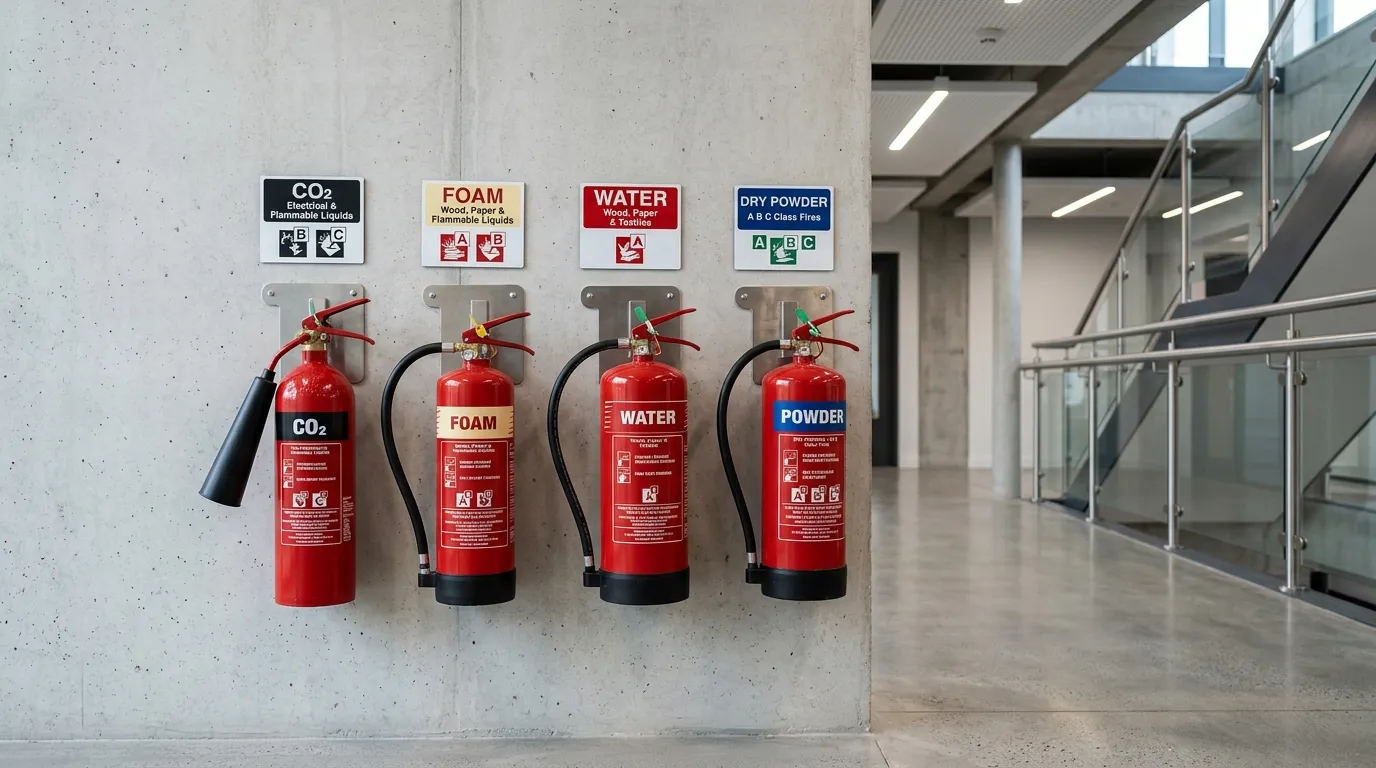
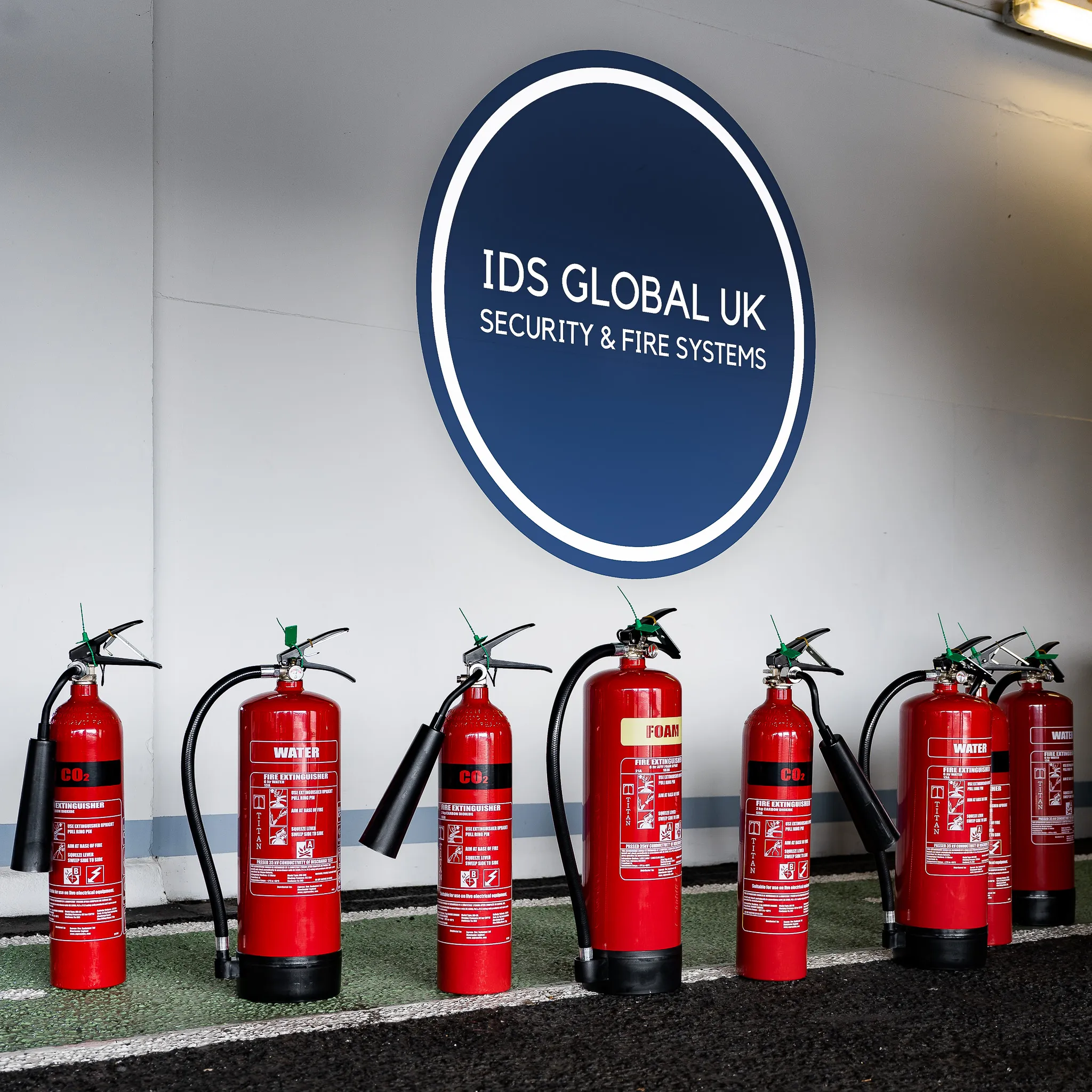
Different fires require different extinguishers. Using the wrong type can be ineffective or dangerous — for example, using a water extinguisher on an electrical fire. There are five main types used in commercial premises:
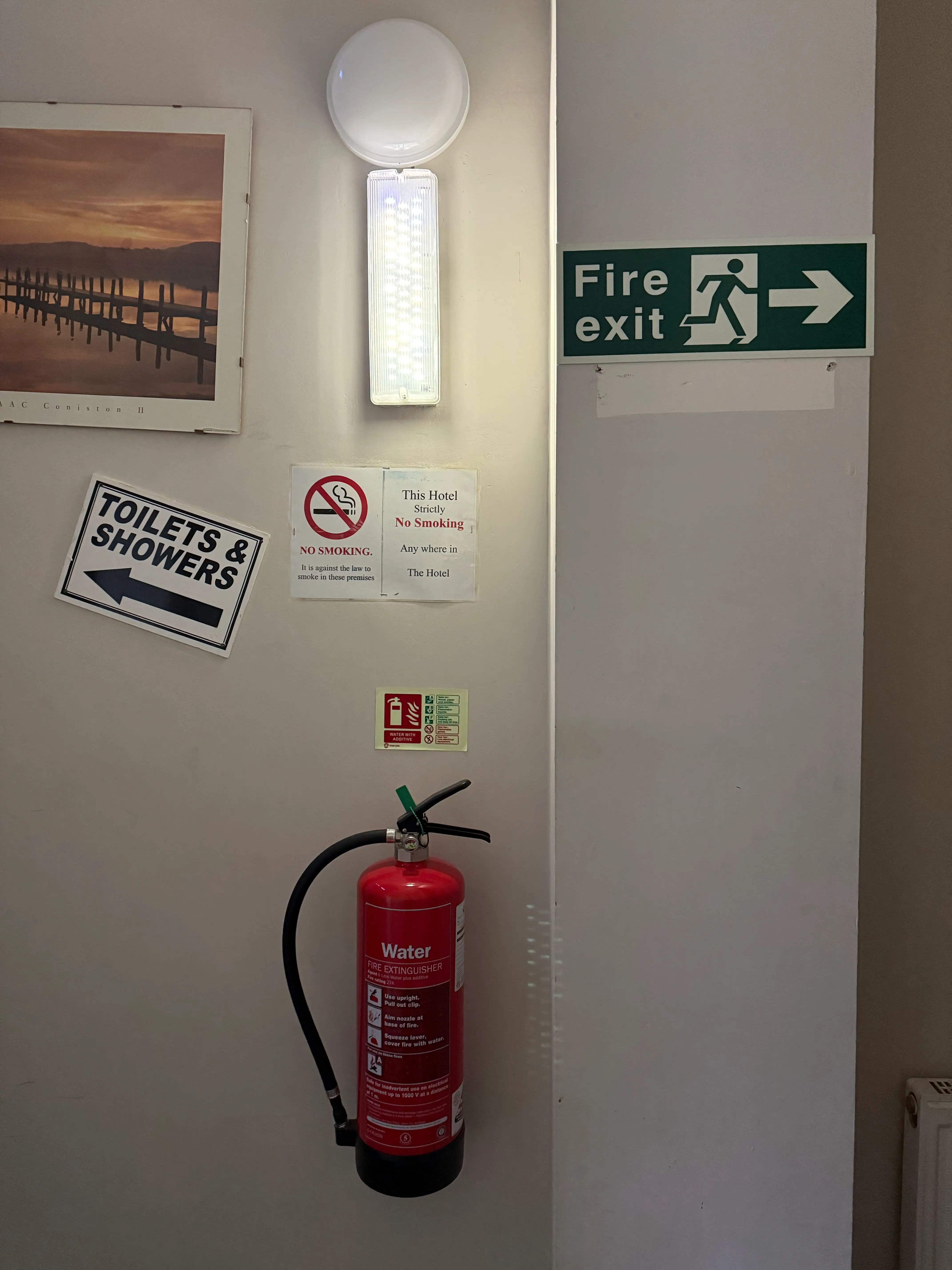
- Water (red label) — Suitable for Class A fires: wood, paper, textiles, and solid combustibles. The most common type for general office environments. Not suitable for electrical or liquid fires.
- Foam (cream label) — Effective on Class A and Class B fires (flammable liquids such as petrol, oil, and solvents). The foam smothers the fire and seals the surface. Safe to use near electrical equipment if it carries a dielectric test rating.
- CO2 (black label) — Designed for electrical fires and Class B liquid fires. Leaves no residue, making it ideal for server rooms, workshops, and areas with sensitive equipment. Does not cool the fire source, so re-ignition is possible.
- Dry powder (blue label) — Multi-purpose extinguisher effective on Class A, B, and C (gas) fires, plus electrical fires. Versatile but leaves a residue that can damage equipment. Best for warehouses, car parks, and outdoor areas.
- Wet chemical (yellow label) — Specifically designed for Class F fires involving cooking oils and fats. Required in commercial kitchens. The chemical reacts with the oil to form a soap-like seal that prevents re-ignition.
Your fire risk assessment determines which types and how many extinguishers your premises need. We survey your building, recommend the correct provision, and install them in the right locations with appropriate signage.
Fire Blankets and Other Equipment
Beyond extinguishers, your premises may require additional fire safety equipment:
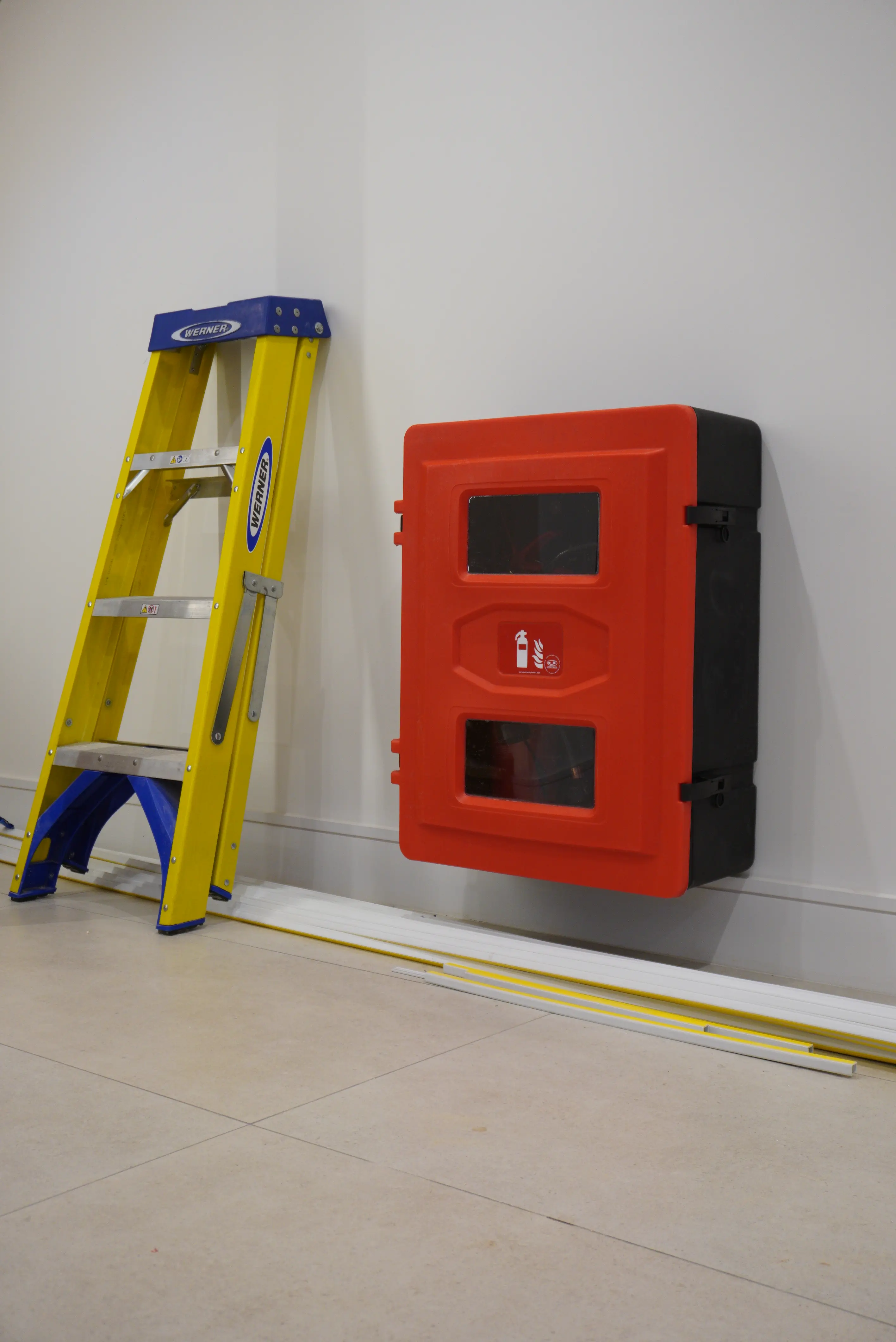
- Fire blankets — Required in any commercial kitchen and recommended near cooking facilities. Used to smother small fires or wrap around a person whose clothing is on fire. Mounted in quick-release wall cases for immediate access.
- Emergency signage — Fire exit signs, directional arrows, fire action notices, and extinguisher identification signs. All signage must comply with BS 5499 and the Health and Safety (Safety Signs and Signals) Regulations 1996. Photoluminescent signs are recommended so they remain visible during power failures.
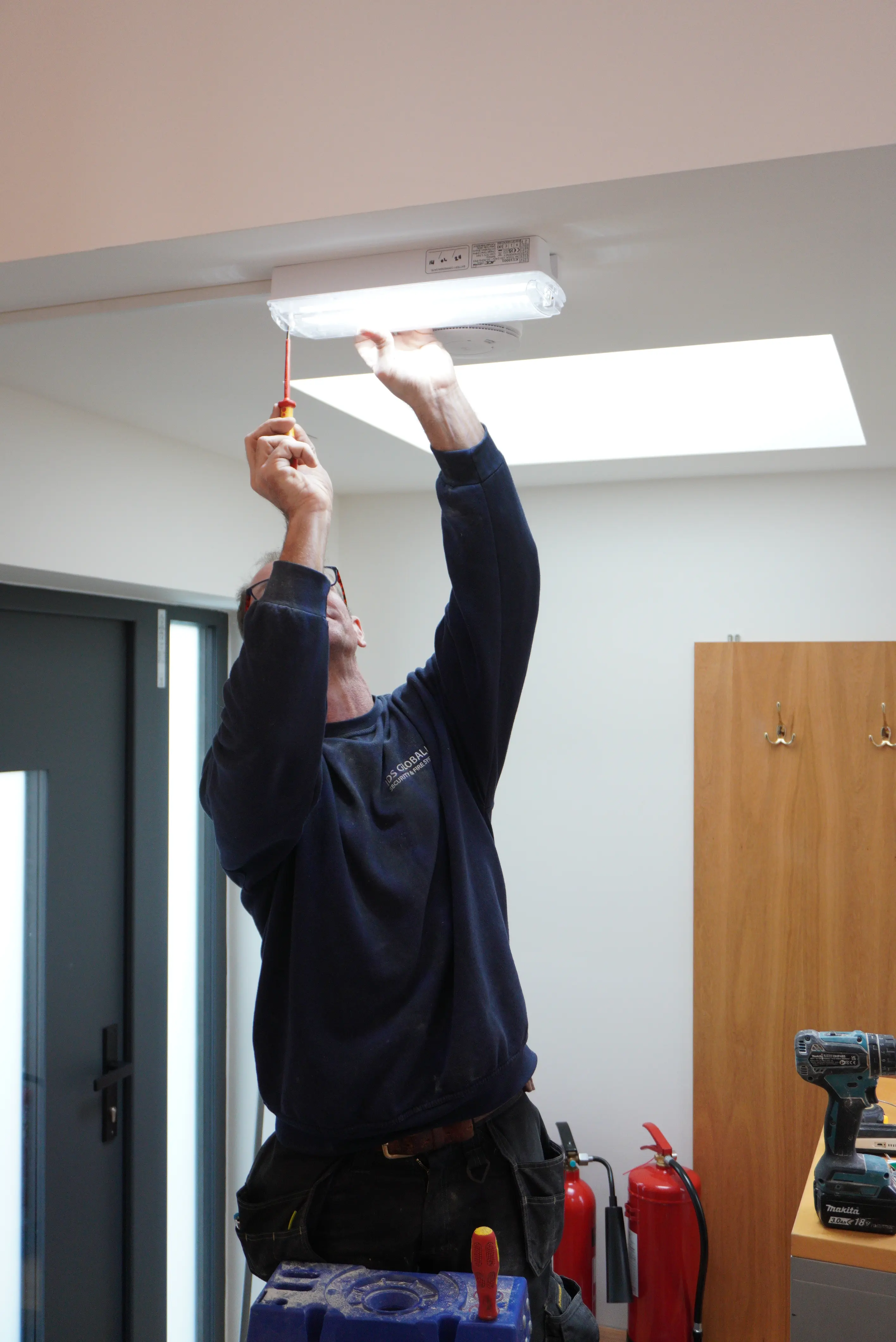
- Emergency lighting — Battery-backed lighting that illuminates escape routes when mains power fails. Required in all commercial buildings. Must be tested monthly and have a full duration test annually under BS 5266.
Servicing and Compliance
Fire extinguishers are not fit-and-forget. BS 5306-3 sets out the servicing requirements:
- Monthly — Visual inspection by the responsible person. Check the extinguisher is in its correct location, the pressure gauge is in the green zone, the safety pin is intact, and there is no visible damage.
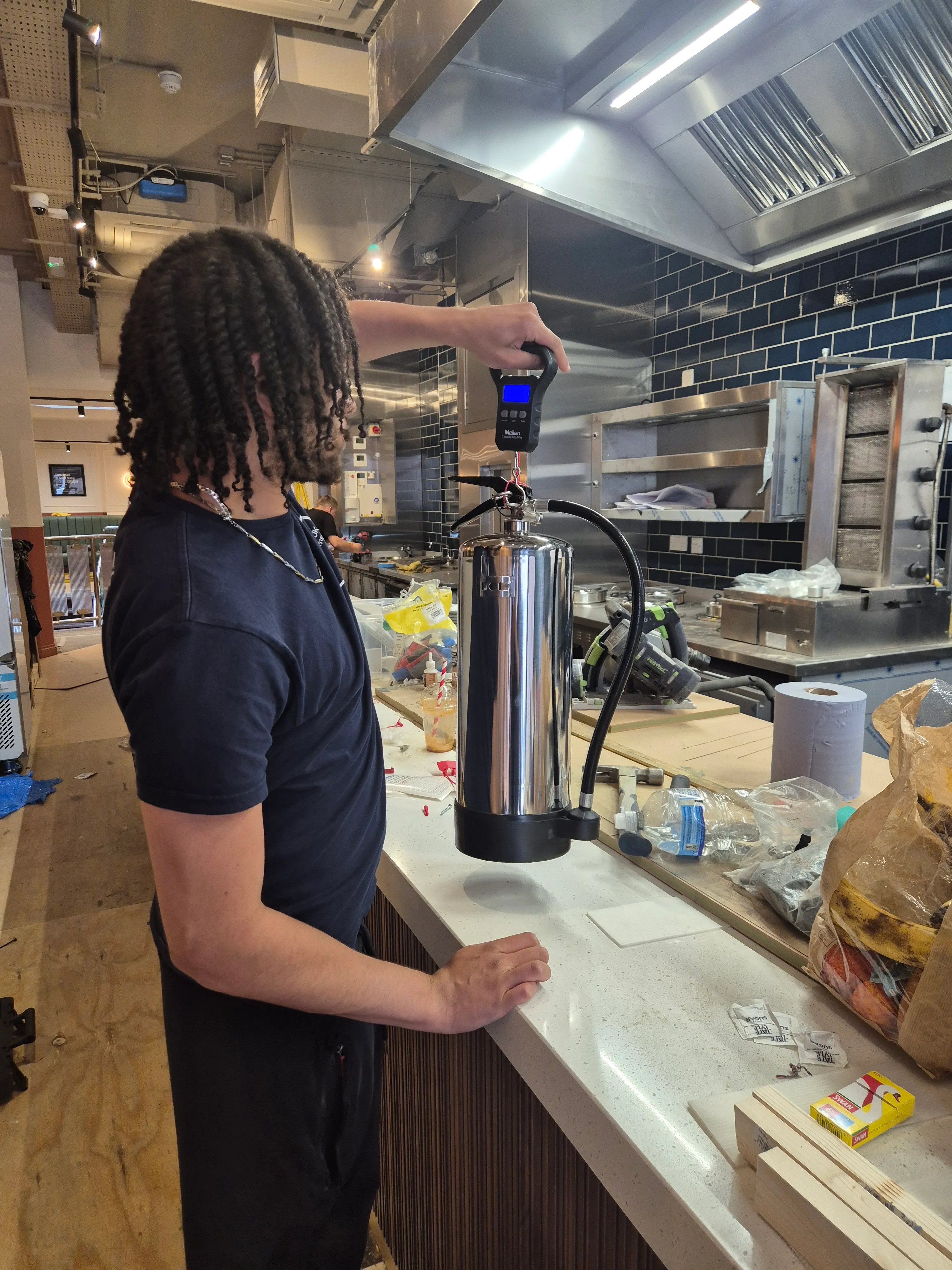
- Annual service — A qualified engineer carries out a full inspection: weight check, pressure test, condition assessment, and replacement of any worn components. A service label is attached confirming the date and engineer details.
- Extended service (every 5 years) — A more thorough overhaul including discharge testing for certain extinguisher types. Some extinguishers may need to be replaced rather than serviced at this stage.
We provide annual servicing contracts that cover all your fire safety equipment. Our engineers visit on a scheduled date, inspect and service every extinguisher, replace any that have failed or expired, and provide a full compliance report for your records.
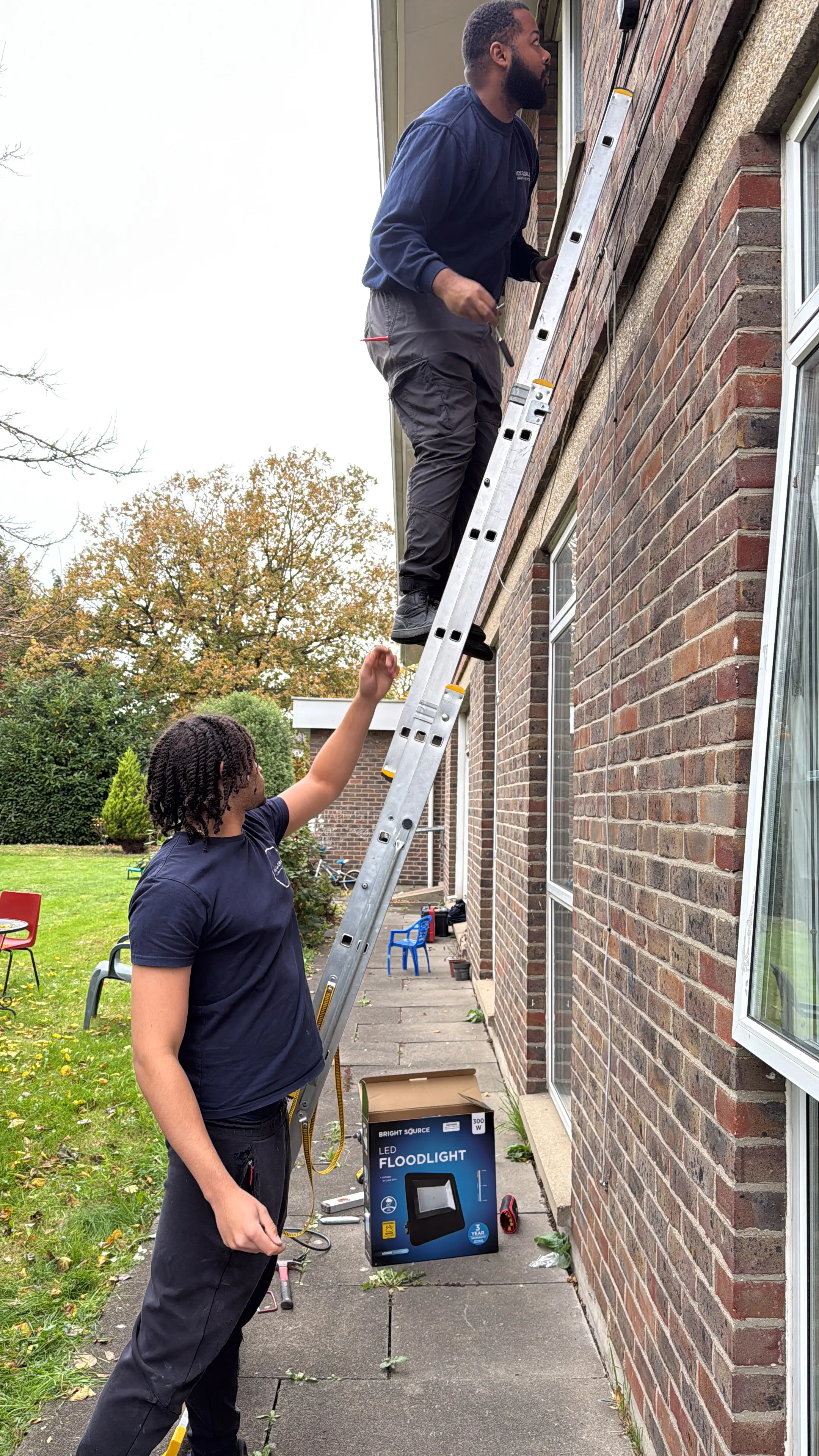
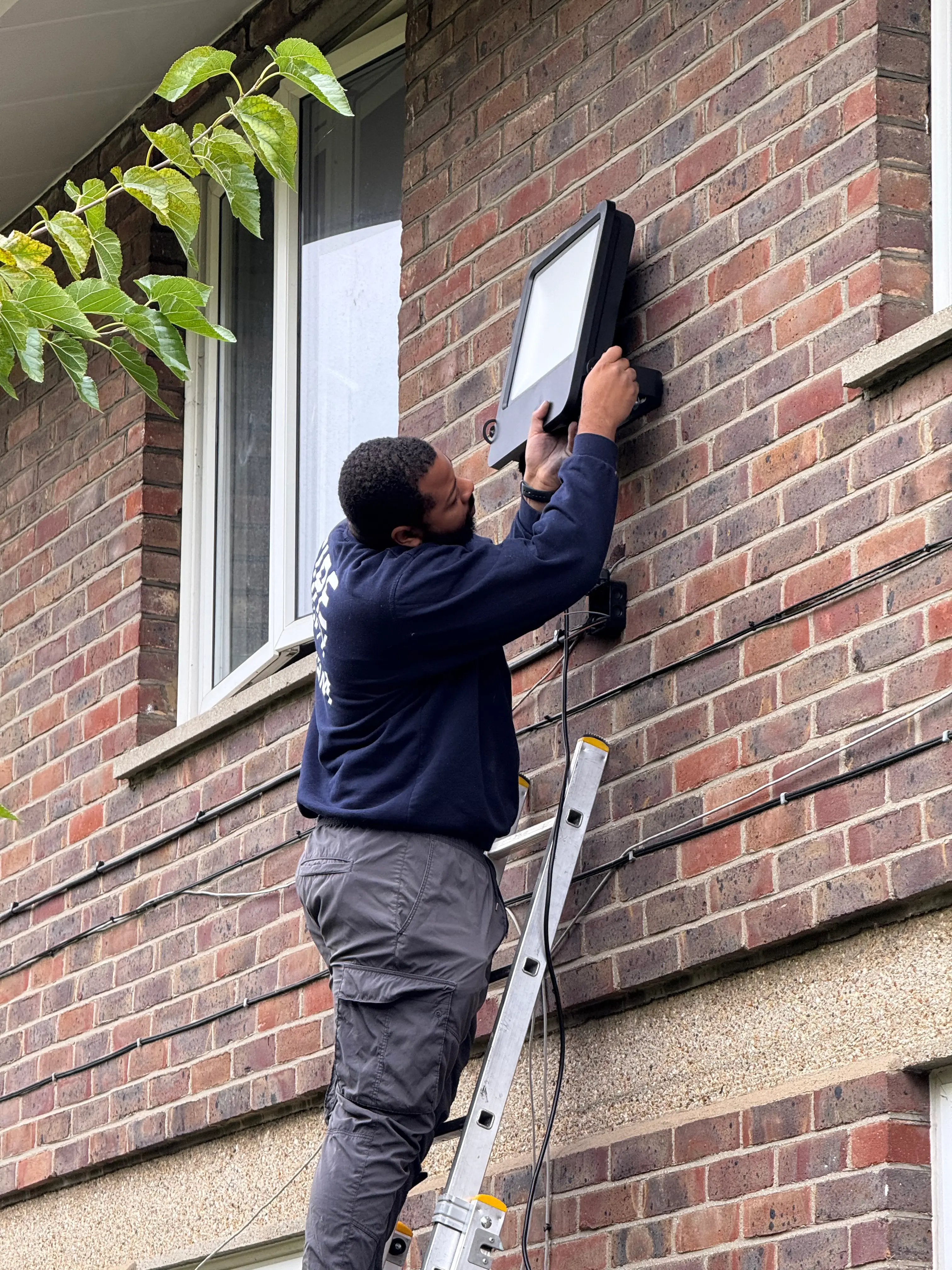
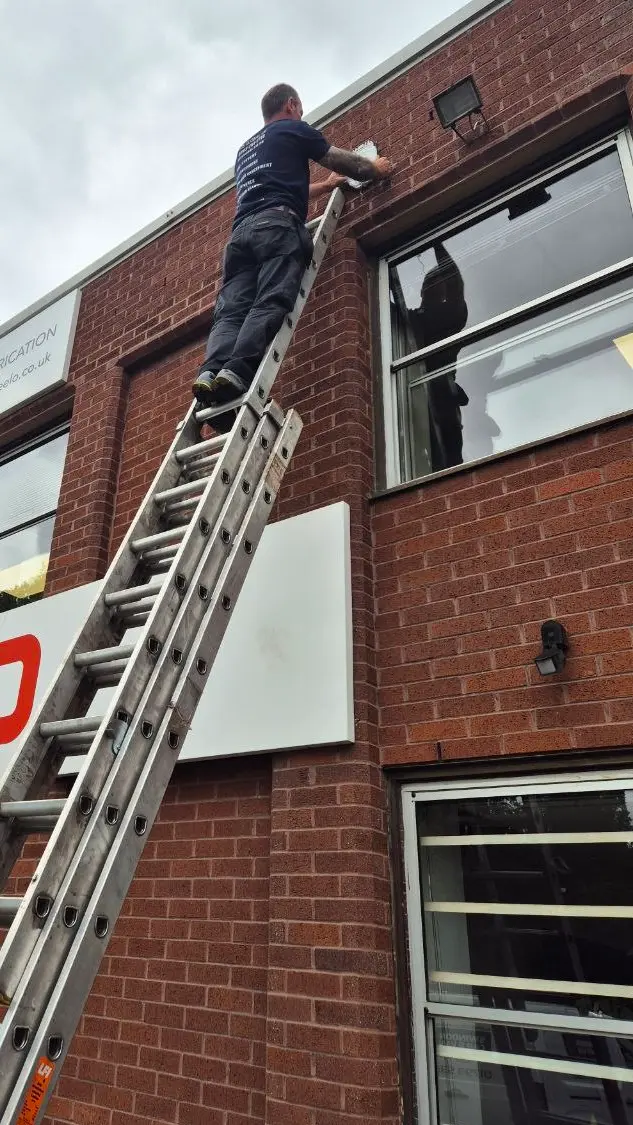
Recent projects
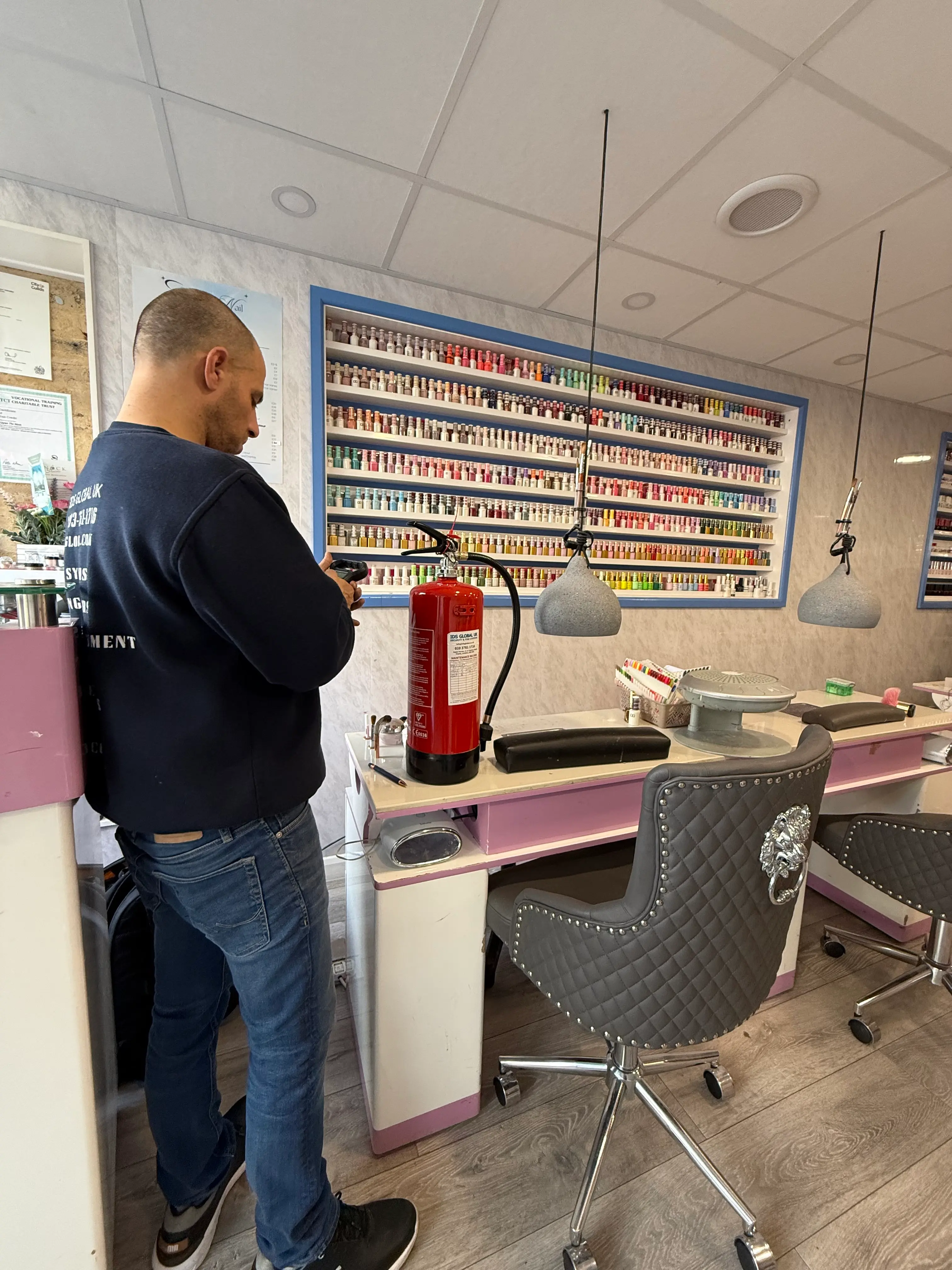
A selection of installations and ongoing maintenance work carried out by our engineers.
Frequently Asked Questions
How many fire extinguishers does my building need?
The number depends on your floor area, the types of fire risk present, and the layout of your premises. As a general guide, BS 5306-8 recommends a minimum of two Class A extinguishers per floor, with additional specialist extinguishers for specific risks (kitchens, server rooms, workshops). Your fire risk assessment will specify the exact requirement.
How often do fire extinguishers need servicing?
Monthly visual checks should be carried out by the responsible person. A full annual service by a qualified engineer is required under BS 5306-3. Extended servicing or replacement is needed every 5 years depending on the extinguisher type.
Can you replace old or expired fire extinguishers?
Yes. We supply and install all types of fire extinguisher and can replace expired, damaged, or obsolete units as part of a routine service visit or as a standalone job.
Do you supply fire safety signage?
Yes. We supply and install all required fire safety signage including fire exit signs, directional arrows, fire action notices, and extinguisher identification signs, all compliant with BS 5499.