
Fire Safety Training
Staff fire safety training, fire warden courses, and evacuation drill coordination.
Why does your team need fire safety training?
A fire alarm means nothing if your staff do not know what to do when it sounds. Fire safety training ensures that everyone in your building understands how to prevent fires, how to respond in an emergency, and how to evacuate safely.
Under the Regulatory Reform (Fire Safety) Order 2005, the responsible person must ensure that employees receive adequate fire safety training. This is not a one-off obligation — training must be provided when staff join, when roles change, and at regular intervals to keep knowledge current.
What Our Training Covers
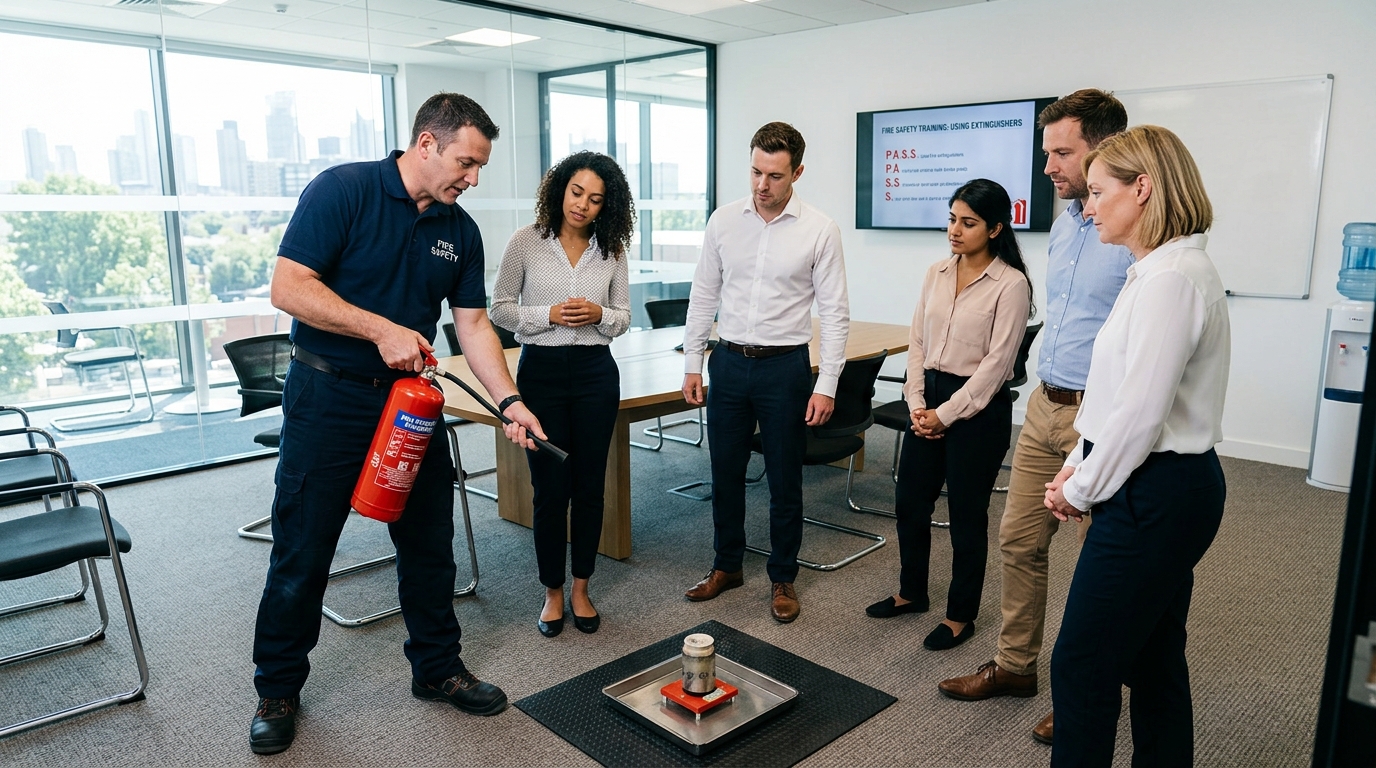
Our fire safety training is delivered on-site at your premises. We tailor the content to your building, your fire risk assessment, and the specific hazards your team faces. A standard session covers:
- Fire prevention — Identifying common causes of fire in the workplace: electrical faults, overloaded sockets, unattended cooking, improper storage of flammable materials, and blocked ventilation.
- What to do if you discover a fire — The "Raise, Call, Fight or Evacuate" procedure. When to attempt to use an extinguisher and when to leave immediately.
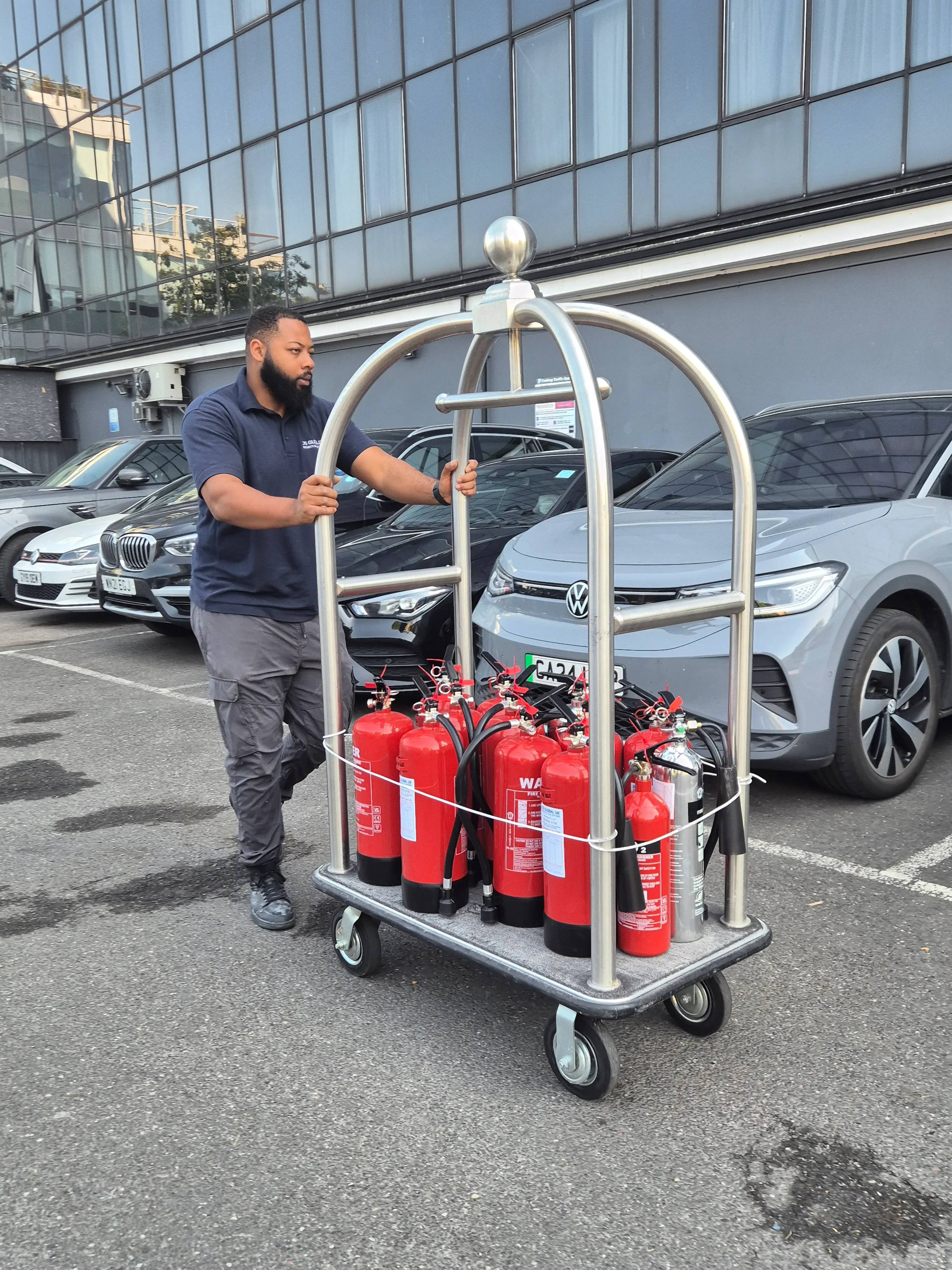
- Fire extinguisher use — Identifying extinguisher types by colour label, understanding which extinguisher to use on which fire class, and hands-on practice with the PASS technique (Pull, Aim, Squeeze, Sweep).
- Evacuation procedures — Knowing your escape routes, assembly points, what to do if a route is blocked, how to assist people with disabilities, and the importance of never using lifts during a fire.
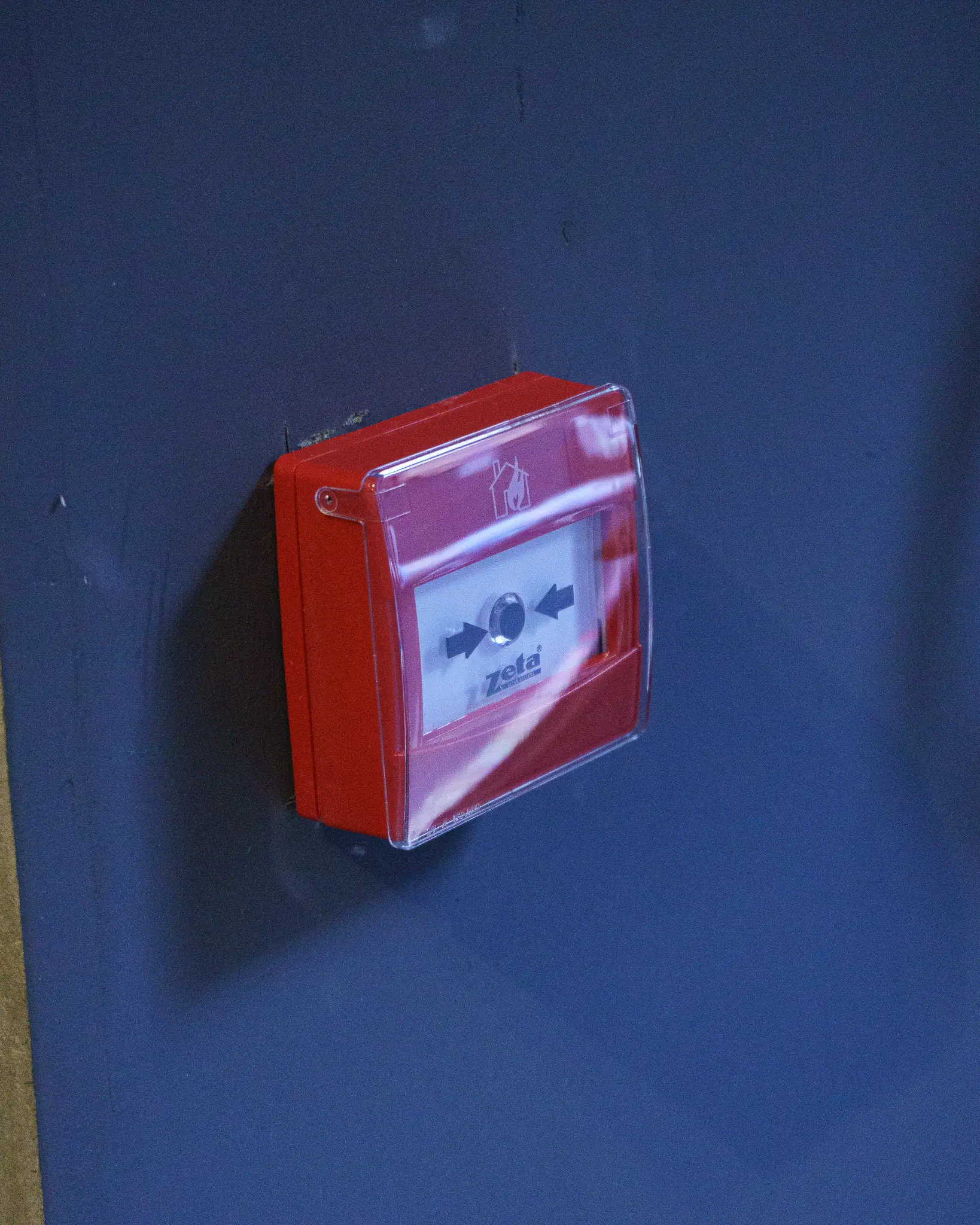
- Your building's fire safety systems — How the fire alarm works, where the manual call points are, what the different alarm signals mean, and where fire safety equipment is located.
Fire Warden Training
Fire wardens (also called fire marshals) take on additional responsibility during an evacuation. Every floor or department should have at least one designated fire warden. Our fire warden training covers everything in the general course plus:
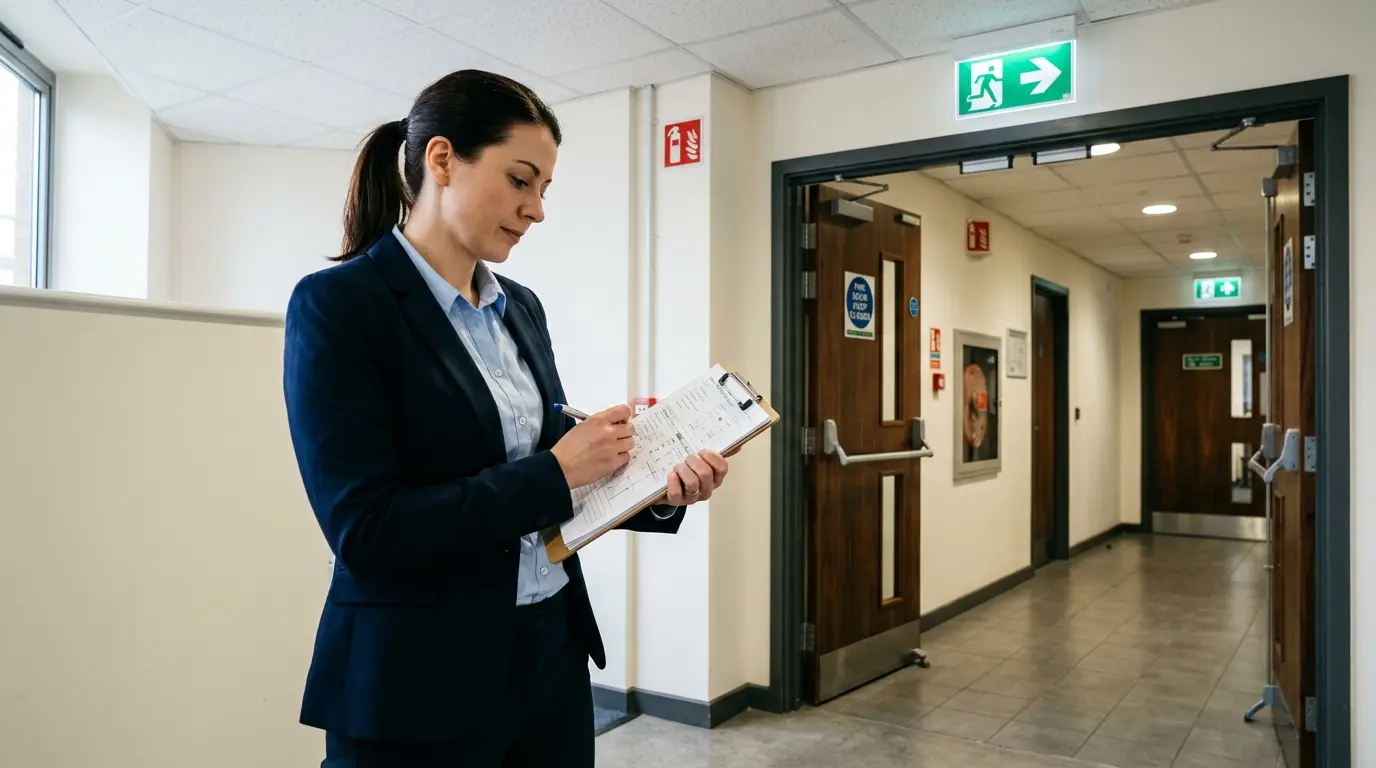
- Sweep and check procedures — How to systematically check your area to ensure everyone has evacuated, including toilets, meeting rooms, and enclosed spaces.
- Assisting vulnerable persons — Supporting people with mobility impairments, hearing impairments, or other needs during evacuation. Using refuges and evacuation chairs where provided.
- Liaising with emergency services — Providing the fire service with information on arrival: where the fire was discovered, whether everyone is accounted for, and any known hazards.
- Record keeping — Maintaining a fire log book, recording weekly alarm tests, documenting drills, and reporting defects.
Evacuation Drills
Training in a classroom is one thing — performing under pressure is another. We coordinate evacuation drills that test your team's response in a realistic scenario. Drills reveal problems that cannot be identified any other way: doors that stick, routes that are blocked by deliveries, staff who do not know their assembly point, and alarm zones that are not loud enough in certain areas.
We recommend a minimum of two evacuation drills per year, with at least one unannounced. After each drill, we provide a debrief covering what went well, what needs improvement, and any changes required to your evacuation plan.
How Often Should Training Be Delivered?
The Fire Safety Order does not specify an exact frequency, but the widely accepted best practice is:
- On induction — Every new employee, contractor, or temporary worker should receive fire safety training before they start working in the building.
- Annually — A refresher session at least once per year for all staff. This is the minimum recommended by fire safety guidance documents including PAS 79.
- After significant changes — When the building layout changes, new hazards are introduced, or the fire risk assessment is updated.
- After an incident or near-miss — Any fire event or evacuation issue should trigger a review of training adequacy.

Frequently Asked Questions
Is fire safety training a legal requirement?
Yes. The Regulatory Reform (Fire Safety) Order 2005 requires the responsible person to ensure all employees receive adequate fire safety instruction and training. This applies to all non-domestic premises in England and Wales.
How long does a training session take?
A general fire safety awareness session typically takes 45-60 minutes. Fire warden training takes approximately 90 minutes to 2 hours. We deliver all training on-site at your premises during a time that suits your operations.
Do you provide certificates?
Yes. All attendees receive a certificate of completion. We also provide a training record for your fire log book, documenting who attended, the topics covered, and the date of training.
How many fire wardens do I need?
There is no fixed legal number, but the general recommendation is at least one fire warden per floor, plus cover for absences (holidays, shift patterns). Buildings with complex layouts or higher occupancy may need more. We advise on the right number based on your fire risk assessment.