Gates & Automation
Automated gate installation, barriers, and bollard systems for perimeter security.
Why automate your gates and perimeter?
Automated gates, barriers, and bollards control vehicle and pedestrian access to your premises. They secure your perimeter, manage traffic flow, and present a professional first impression — all without needing a security guard at every entry point.
We design and install automated gate systems for commercial premises, industrial sites, car parks, residential developments, and HMOs across London. Every installation is tailored to the site — the gate type, automation mechanism, access method, and safety features are all specified based on your requirements.
Types of Automated Gate
The right gate type depends on your available space, traffic volume, and security requirements:
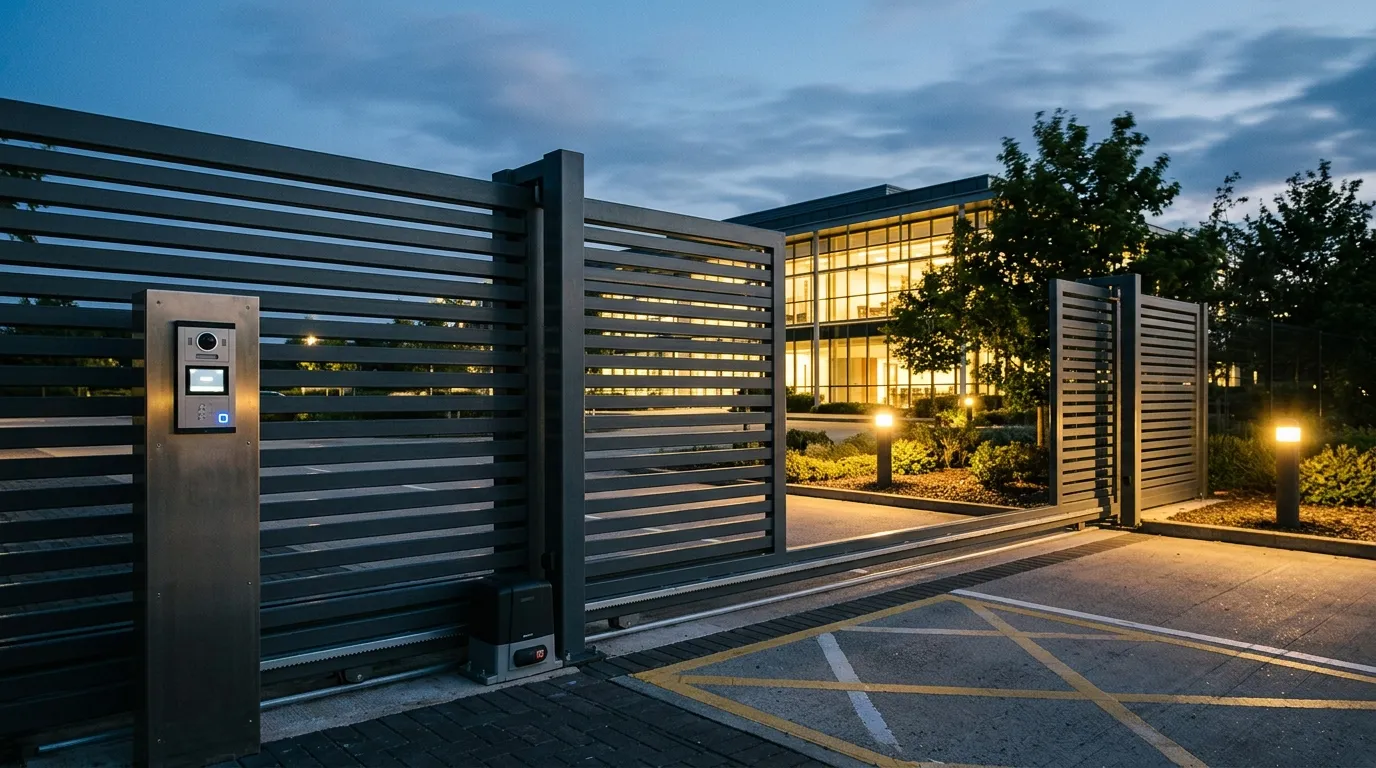
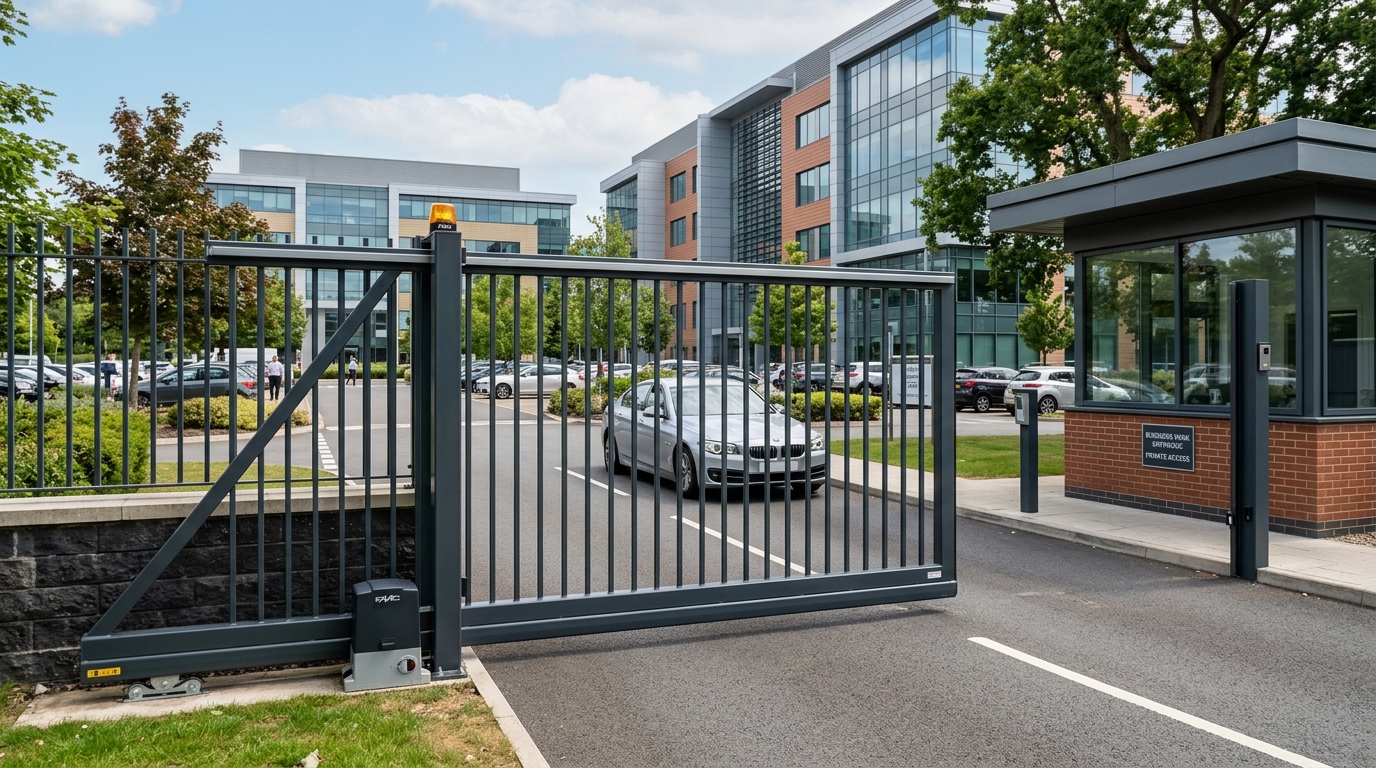
- Sliding gates — Track-mounted gates that slide horizontally to open. Ideal when there is limited space for a gate to swing, and for wide openings. Commonly used on commercial and industrial sites.
- Swing gates — Traditional hinged gates that open inward or outward. Suitable for sites with adequate clearance and lower traffic volumes. Available in single-leaf and double-leaf configurations.
- Bi-folding gates — Gates that fold in half as they open, requiring less space than a full swing. Fast operation speed, making them suitable for high-traffic commercial entrances.
- Barriers — Arm barriers for car parks and vehicle checkpoints. Fast operation, low maintenance, and effective for managing vehicle flow without the cost of a full gate.
- Rising bollards — Retractable steel bollards that rise from the ground to block vehicle access. Used for high-security applications, pedestrian zones, and controlled vehicle areas.
Access Methods
Automated gates can be opened using a range of access methods, and most installations combine two or more:
- Remote control — A handheld transmitter for authorised users. Simple and convenient for regular users.
- Keypad — PIN code entry on a weatherproof keypad. Suitable for staff and regular visitors.
- Proximity fob or card — Integration with your building's access control system. The same credential opens the gate and the front door.
- Intercom — Audio or video intercom allows visitors to request access. The operator can grant entry remotely from inside the building.
- Number plate recognition (ANPR) — Cameras read vehicle registration plates and open the gate automatically for authorised vehicles. Ideal for car parks and sites with high vehicle throughput.
- Telephone entry — The intercom calls a mobile number. The recipient can open the gate by pressing a key on their phone, even when off-site.
Safety and Compliance
Automated gates are machinery, and they carry safety risks — particularly crushing and trapping hazards. Every installation must comply with the Machinery Directive and the Supply of Machinery (Safety) Regulations 2008. We ensure compliance through:
- Force limitation — Gate operators are set to stop or reverse if they encounter an obstruction, preventing crushing injuries.
- Safety edges and photocells — Pressure-sensitive strips on the leading edges of the gate detect contact. Photocell beams across the opening detect vehicles or pedestrians in the gate's path.
- Warning signage and lights — Flashing lights and audible warnings alert people when the gate is operating. Signage indicates the gate is automated.
- Manual release — Every automated gate must have a manual release mechanism for use in emergencies or power failures.
- Risk assessment and CE/UKCA marking — We carry out a full risk assessment for every installation and issue a Declaration of Conformity. The gate system receives a CE/UKCA mark confirming it meets all safety requirements.
Gate safety is not optional — an unsafe automated gate is a serious liability. We see poorly installed gates regularly and offer safety assessments for existing installations.
Frequently Asked Questions
How long does a gate installation take?
A typical single-gate installation takes 2-3 days including groundworks, gate fitting, automation, and commissioning. More complex installations (double gates, bollards, ANPR integration) may take longer. We provide a clear timeline before work begins.
Do automated gates need planning permission?
In most cases, no — automated gates on commercial premises fall under permitted development. However, if your property is in a conservation area, is a listed building, or the gates exceed 2 metres in height adjacent to a highway, you may need planning permission. We advise on this during the site survey.
What maintenance do automated gates require?
We recommend a service at least once per year covering the motor, hinges, tracks, safety devices, and electrical connections. High-usage gates (multiple operations per day) benefit from twice-yearly servicing. Regular maintenance extends the life of the equipment and ensures safety compliance.
Can you repair or automate an existing manual gate?
Yes. We regularly retrofit automation kits to existing manual gates, provided the gate structure is in good condition and suitable for motorisation. We assess the gate, recommend the appropriate operator, and handle the full installation including safety devices and access control.